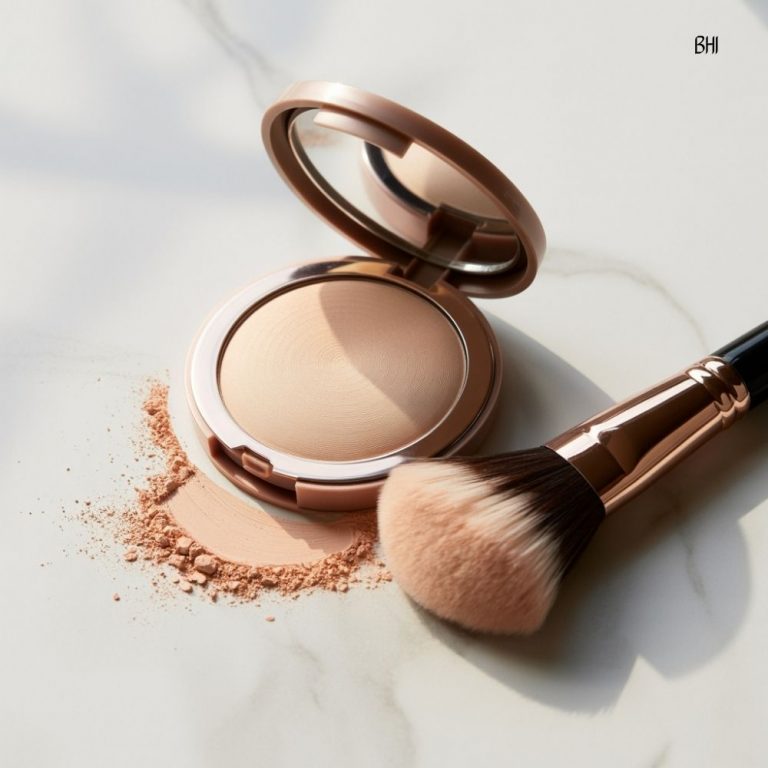
I’ve always been someone who uses hand cream throughout the day because my hands react fast to weather and temperature changes. But there was one thing I didn’t notice: the inner fabric of my totes started to develop faint smudges, cloudy patches, and darker streaks.
Only after it happened repeatedly did I finally slow down enough to observe the pattern. The stains always appeared in the same area: along the upper inner wall of the bag, slightly below the handles, right where my hand naturally rests when I slip my arm inside and let the tote fall backward against me.
The marks looked like dirt at first, but the texture was wrong. They didn’t smudge like dirt or dust. They didn’t behave like pen streaks. Instead, they stayed faint, uneven, and soaked into the fibers in a strangely familiar way.
It took far too long for me to admit what was actually happening. It was hand cream mixed with pressure, friction, and the natural warmth of my palm.
And once I understood the pattern, fixing it didn’t just feel possible, it felt mechanical.
Why Tote Bags Are Especially Vulnerable to Hand Cream Staining
Hand cream doesn’t behave like a typical “product stain.” It doesn’t splash or smear. It transfers slowly, through repeated micro-contacts. Tote bags are uniquely vulnerable because they have three characteristics that almost guarantee transfer:
- Soft inner linings that absorb oil instead of resisting it
- Large open tops that invite hand contact
- Natural swinging movement that increases friction
The combination of absorbent fabric + repeated brushing + warm skin means the oil settles into the tote gently but persistently.
Rigid bags don’t have this issue because their structured walls reduce contact. Backpacks don’t either, because their inner pockets sit deeper and don’t meet your hand until your palm is dry again.
Totes are the perfect environment for this subtle collision of warmth, friction, and fabric behavior. And the stains appear quietly because the oil doesn’t hit all at once; it accumulates in micro-layers over time.
Once I studied that pattern, creating a solution became an engineering problem rather than a guessing game.
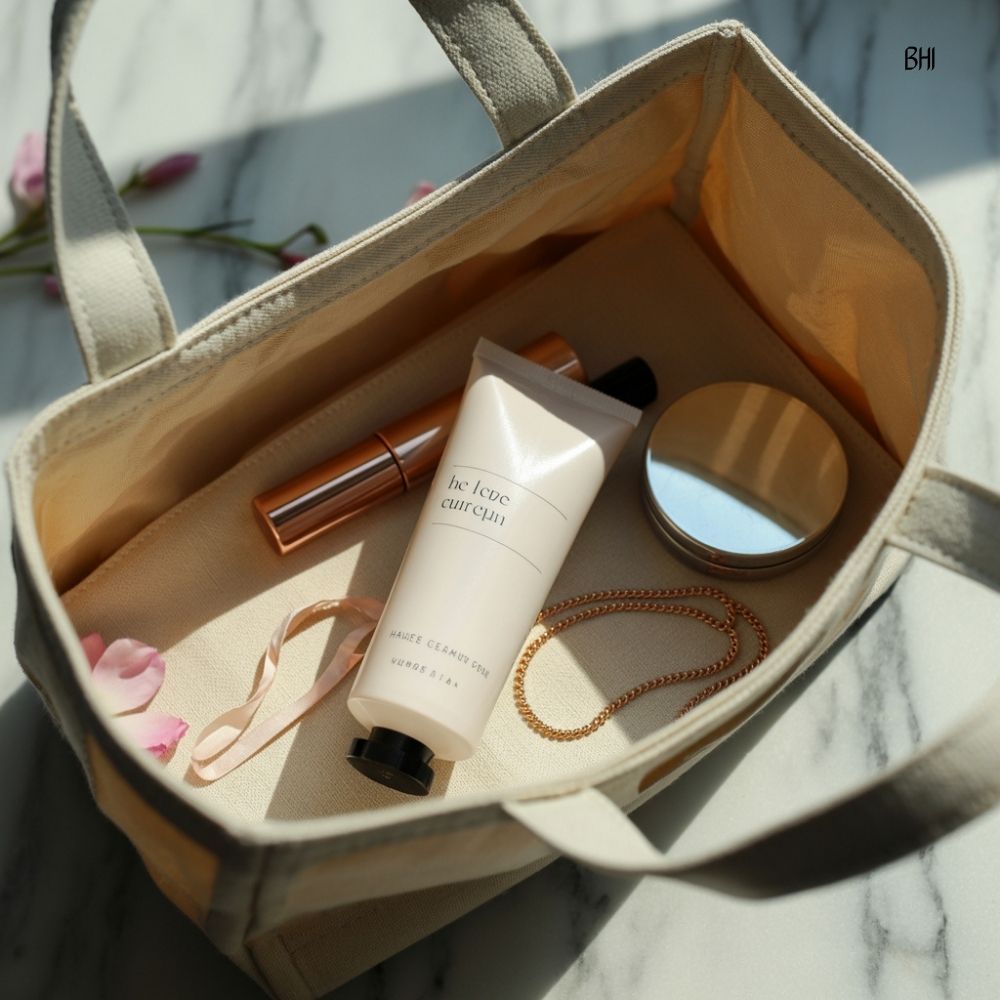
How I Designed the Strip and Why It Works So Well
The goal wasn’t to protect the entire interior. Most of the tote doesn’t get touched at all. The contact zone is a soft angle where the bag folds inward as my hand enters. So the strip didn’t need to be large. It needed to be:
- thin, so it didn’t change the shape of the bag
- oil-resistant, not oil-absorbing
- smooth, to reduce friction
- breathable enough not to trap moisture
- secure, so it didn’t peel or slip
I tried several materials: satin, canvas, microfiber, nylon. Nylon won immediately because oil doesn’t absorb into it. It’s the same reason makeup bags often use nylon interiors; they resist product staining better than cotton or linen.
But the strip also needed to move with the bag, not against it. I cut the nylon in a slightly curved shape that matched the inner angle where the fabric folds. That curve made it behave like part of the tote rather than an add-on.
The DIY Strip for Tote Bags
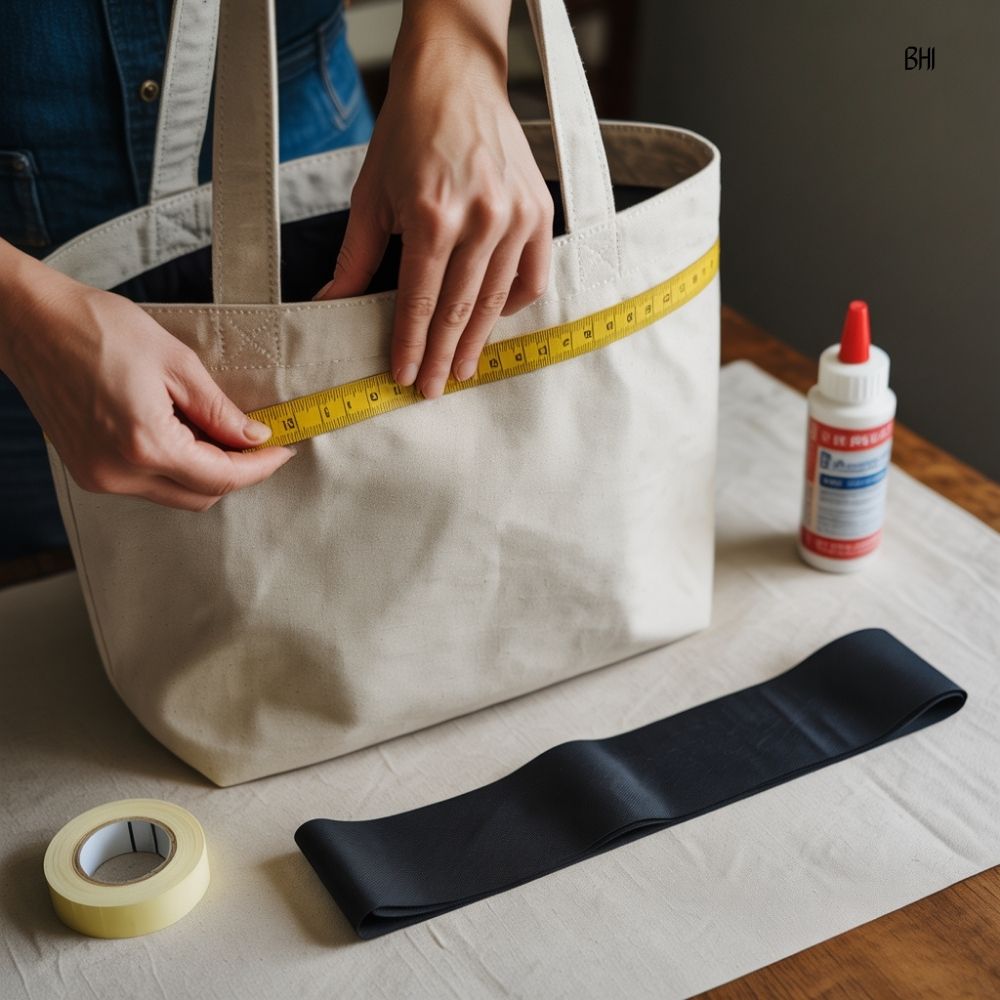
Materials:
- A thin piece of nylon fabric (preferably matte, not shiny)
- Fabric-safe adhesive tape or fabric glue
- Scissors
- Measuring tape
How I Make It:
- Measure the inner upper section of the tote where your palm naturally brushes.
- Cut a curved or slightly angled strip of nylon matching that length.
- Apply a thin line of fabric glue or adhesive tape along the back of the strip.
- Press it firmly inside the tote, smoothing from the center outward.
- Let it set for several hours before using the bag.
How It Functions:
- The nylon becomes the first point of contact, absorbing the micro-transfer instead of the tote fabric.
- Because nylon doesn’t soak up oil, stains don’t “set.”
- A quick wipe with a damp cloth resets it completely.
The First Day I Tested the Strip
The real test happened on a humid morning after I had applied a heavier-than-usual hand cream because my skin felt tight when I woke. I placed my keys, phone, and a notebook in the tote as I rushed out the door.
At lunch, I finally looked at the inside of the bag and realized that nothing had changed. No new marks. No deepened discoloration. The nylon strip had caught every bit of product without absorbing any of it, and the surface looked the same as it did the day I added it.
That small success felt deeply satisfying because it meant the fix wasn’t dependent on careful behavior. It adapted to my natural movement instead of expecting me to be mindful every time I reached into my bag.
This is the kind of solution I rely on: something that corrects the behavior without controlling it.
Why This Strip Protects Tote Bags More Effectively Than Stain-Repellent Sprays
I tried stain repellents at first, hoping they would create a protective coating. But sprays don’t create a barrier; they simply slow the absorption of certain types of stains.
Oils aren’t repelled the same way water is, and tote bags often have soft, woven interiors that absorb product no matter how much spray you apply.
Sprays fail because:
- oil molecules are too small
- friction forces them deeper
- body heat accelerates absorption
- the lining fabric behaves like a sponge
A physical barrier works because it changes the surface entirely. Instead of trying to prevent absorption, it prevents contact. And once contact stops, the problem ends.
How This Strip Changed the Way I Think About Everyday Items
This little add-on made me think differently about how I use the things I carry. Instead of assuming stains or wear are inevitable parts of daily life, I began noticing that most damage has a predictable mechanical cause.
Wear and tear often happen at the same points repeatedly: elbows of sweaters, inner corners of wallets, handle areas of bags. Once you identify the pattern, it becomes easier to design around it.
The tote strip taught me that:
- behavior patterns matter more than products
- friction zones predict long-term wear
- oil behaves differently than dust or dirt
- temperature accelerates absorption
- small reinforcements can shift an entire object’s lifespan
It made me view my belongings as systems rather than objects.
A Closing Reflection From Juno Wilde
This little strip is not dramatic. It isn’t a large DIY project or a stylish accessory. It’s simply a precise solution to a small but predictable problem.
It protects the fabric in the exact spot where damage normally begins, and in doing so, it keeps the tote looking clean far longer than it otherwise would.
It’s the kind of fix I appreciate the most: subtle, engineered, unobtrusive, and quietly effective. A detail you never think about again until you realize your bag still looks new.