For years, I tried to build an everyday look the same way most people do: by collecting inspiration, saving images, and following trends that promised to simplify everything.
I made lists of what I thought I should wear. I pinned makeup styles that looked good on people with completely different lives than mine. I assembled color palettes and tried to commit to them.
Nothing stayed consistent. Every routine I adopted dissolved the moment my schedule changed, the weather shifted, or a new trend felt more relevant.
The turning point came on a morning when I had no energy to experiment. I reached for the same products I always reached for on tired days, tied my hair the same way I always did when I needed it out of my way, and chose clothing I never questioned because it simply worked.
When I passed a window on my way out the door, the reflection staring back looked more like me than any curated version I had tried to force.
It was the first time I understood that your everyday look is not something you construct. It is something you uncover by watching what remains steady when everything else changes.
Noticing Patterns in Days When You Aren’t Trying
The most honest version of your everyday look appears on the days when effort feels optional. These are not necessarily the days when you feel your best, but they reveal what you instinctively return to. I didn’t set out to study myself this way.
It happened naturally because my life refused to maintain the kind of predictability that aesthetic planning required. Some mornings were structured. Others were rushed.
Some were slow and reflective. Some felt scattered. Yet I realized I was reaching for the same handful of items regardless of mood or schedule.
At first, I assumed this was habit. But the more attention I paid, the more I realized it was recognition. I trusted these choices because they had never failed me.
They fit my environment. They fit my lifestyle. They fit the way my face settles across the day. Trends may have influenced temporary experiments, but they never influenced my defaults.
Your everyday look isn’t the version you create when you have time. It’s the version that appears when you don’t need to think.
Observing What Your Face Naturally Does Throughout the Day
One thing that confused me for years was the way my face would subtly change across the day. In the morning, features felt narrower, more defined.
By late afternoon, my expression softened, and the warmth in my skin became more noticeable. Lighting, weather, and fatigue all contributed to these shifts. Yet I kept trying to create routines that ignored the way my face actually behaved.
When I finally started observing the consistencies, I understood that my everyday look needed to support these patterns, not override them. I stopped applying makeup in ways that contradicted the structure of my face and began applying it in ways that echoed what was already present.
This is the moment your everyday look becomes effortless: when it works with your natural tendencies rather than against them.
The Role of Environment in Revealing What Never Changes
I live in a space where light changes constantly. Large windows shift the tone of the room throughout the day.
Warm sunlight in the morning becomes cooler as clouds move in. The air dries in winter and thickens in early summer. For a long time, I assumed my appearance was changing dramatically. In reality, the light was changing, not me.
Once I separated those two ideas, I noticed that several things about my appearance remained steady regardless of conditions:
- the natural direction my hair prefers to fall
- the tones in my skin that stay visible no matter the light
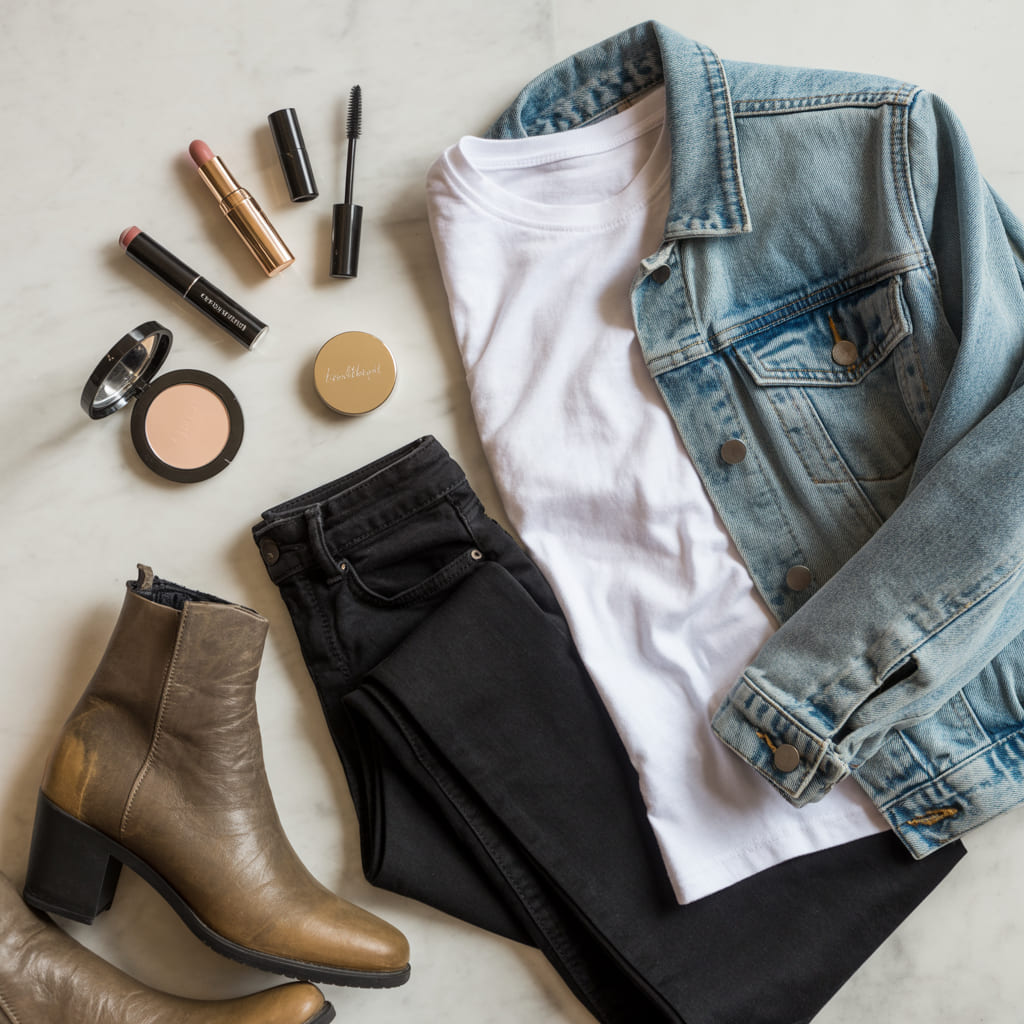
- the clothing silhouettes that stay proportional through seasonal shifts
- the way my face responds to subtle definition but resists heavy structure
These constants became anchors. When I built looks around them, everything felt more aligned. When I ignored them, everything felt performative.
Environment influences perception, but it does not alter your underlying structure. Observing that distinction is the foundation of finding your everyday look.
How Experience Helps You Distinguish Between Preference and Habit
There is a difference between habits you maintain out of convenience and patterns you return to because they suit you. I learned to distinguish between the two by paying attention to days when I had options.
On days when I had time to think, I still chose the same narrow range of colors, shapes, and textures. That was preference. On days when I was tired or late, I sometimes chose shortcuts. That was habit.
Through observation, I realized that my everyday look was built on preferences that held steady even under scrutiny. I preferred tones that felt grounded rather than bright.
I preferred hair that moved naturally rather than holding a set shape. I preferred makeup that emphasized structure rather than adding drama.
None of these choices came from trends. They came from the consistency I noticed across years of seeing my reflection in a range of environments.
Building a Routine Around What You Already Trust
Once I understood what remained stable, my routine became almost effortless. I no longer needed large collections of products or endless clothing combinations.
I needed only the items that aligned with the constants I had observed in myself. The entire process simplified itself because the foundation became less about choice and more about recognition.
A few things proved essential for creating this sense of stability:
- understanding what my face naturally expresses
- choosing colors that always felt grounded, not seasonal
- accepting my hair’s natural direction and movement
- selecting silhouettes that remained balanced across years
These were not styling decisions in the traditional sense. They were acknowledgments of who I already was.
How Consistency Creates Effortless Identity
People often assume an everyday look is about minimalism or convenience. In reality, it is about clarity.
When you observe yourself honestly and consistently, you begin identifying patterns that shape your aesthetic identity. You stop chasing reinvention because you realize the version of yourself that feels most grounded has always been present.
The beauty of finding your everyday look is not that it simplifies your routine, though it often does. It’s that it stabilizes your sense of appearance. You stop reacting to temporary changes in trends, weather, mood, or lighting. You trust the constants. You trust yourself.
A Closing Perspective
My everyday look was never created in a single moment of realization. It formed gradually through years of small observations. Once I stopped pushing myself toward constructed aesthetics and started paying attention to what naturally remained, everything shifted.
Your everyday look is not a curated identity. It is the collection of things you choose without thinking, the details that reappear no matter the season, and the qualities that remain stable despite the shifting environment around you.