There was a long period when my makeup base seemed to fall apart no matter which products I used. Some days the foundation clung to texture I didn’t see before the application.
Other days it moved across the skin in a way that suggested the surface was uneven even when it looked smooth. I tried switching formulas. I tried using less product. I tried applying more product. None of those adjustments changed the result consistently.
So I began observing the skin with more precision. I looked at it under different lighting. I examined it immediately after cleansing. I checked it again after moisturizing.
What I eventually noticed was subtle but consistent: on the days my makeup performed poorly, the surface of my skin felt slightly different. It was the kind of texture that didn’t show on the surface but could be felt by running a fingertip across the cheek or chin.
That tiny, almost undetectable unevenness was the problem. The makeup wasn’t clinging to dryness or interacting with oil. It was responding to a thin layer of micro-buildup that regular cleansing didn’t remove and that standard exfoliation addressed too aggressively.
Realizing that difference changed everything.
Why Traditional Exfoliation Didn’t Solve the Problem
When most people think of exfoliation, they imagine either scrubs that remove dead skin or acids that loosen it. Both methods work, but both operate on a deeper level than what I needed.
My issue was not accumulated dead skin. My issue was a barely-there layer caused by weather shifts, product residue, environmental particles, and the natural turnover of skin that happens between regular exfoliation days.
Traditional exfoliation addresses this indirectly. It removes deeper layers that contribute to dullness or clogged pores. But it does not always remove the ultrathin film that forms on the surface and disrupts makeup adherence.
That film behaves differently depending on humidity, temperature, and how many layers of product the skin has absorbed during the week. On some days, it barely exists. On other days, it interferes with makeup immediately.
The Morning I Confirmed That Surface Texture Was the Cause of Every Makeup Issue
The turning point came on a morning when nothing seemed wrong with my skin, and yet, within minutes of applying my base, the texture looked disrupted. I removed everything and examined the skin again.
Under harsh light, I noticed a faint dullness on areas that usually remained smooth. It wasn’t dryness. It wasn’t oil. It was a thin, almost invisible layer that seemed to sit on top of the skin like a film.
I dampened a cotton pad, slid it across the area, and felt the slightest resistance. The skin wasn’t rough, but it wasn’t clean enough for makeup. That resistance told me everything I needed to know: the makeup was failing because the surface wasn’t prepared for it.
That moment is what pushed me to create a micro-exfoliant. It’s gentle enough for frequent use, effective enough to remove only the uppermost layer, and calibrated enough to become a consistent part of makeup prep instead of a corrective treatment.
How I Created a Micro-Exfoliant That Works Only on Makeup Days
The formula I created wasn’t based on anything complicated. It came from focusing on two requirements: the texture needed to be gentle enough to lift only the uppermost layer, and the medium needed to remain light enough not to leave residue behind.
I tried sugar first, but the grains dissolved too quickly and created inconsistent abrasion. I tried salts, but even when fine, they felt too sharp for frequent use. I tried acids, but they acted too deeply and didn’t provide the kind of mechanical lift I needed.
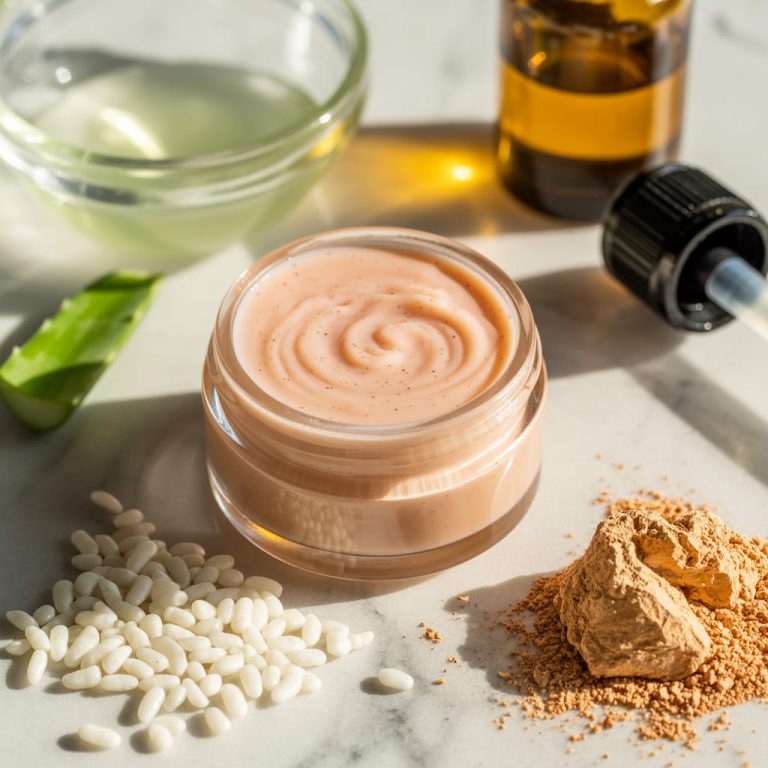
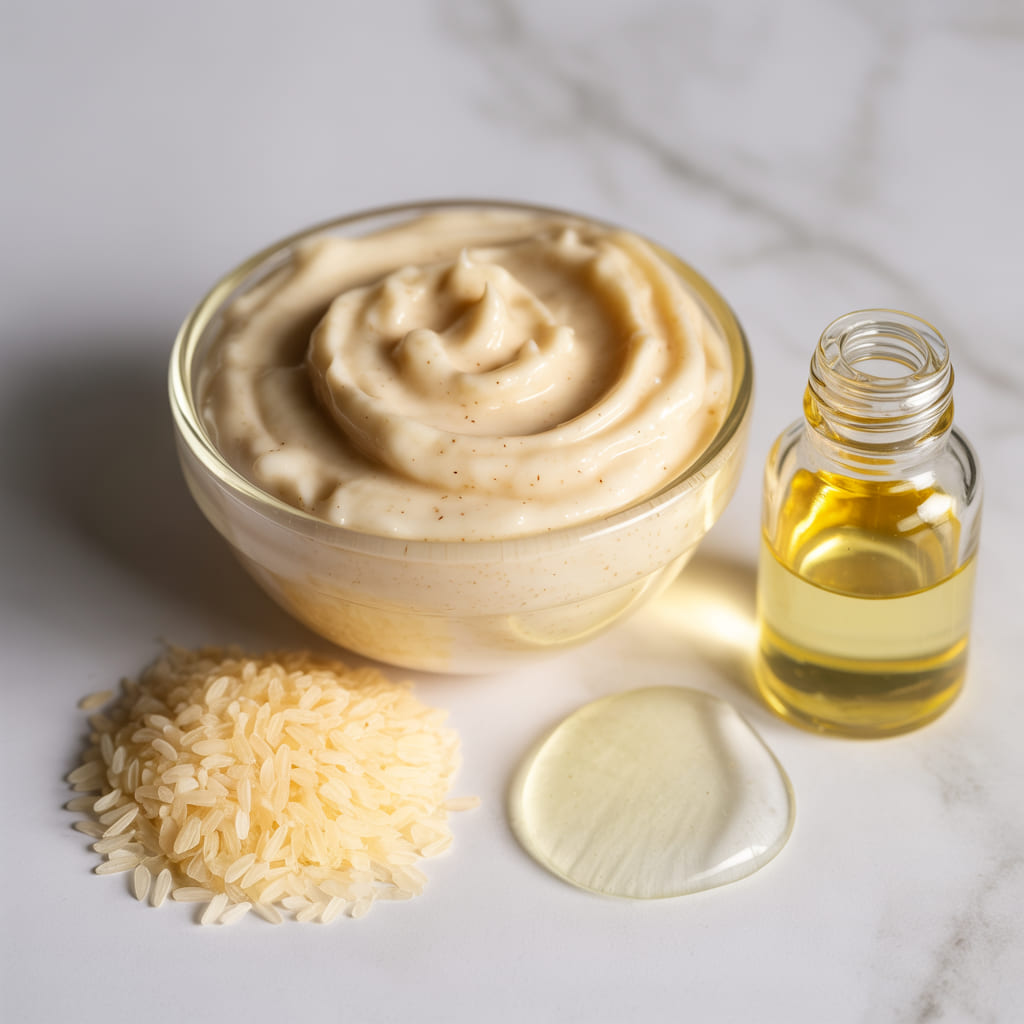
Eventually, I found that a combination of extremely fine rice powder and a light liquid base created the perfect balance. The rice powder offered a micro-exfoliating effect so subtle that it didn’t feel like exfoliation at all.
The liquid base ensured the powder distributed evenly and rinsed cleanly. The result was a treatment that addressed only what interfered with makeup performance.
Over time, I refined the consistency until it behaved exactly the way I wanted it to: a micro-adjustment rather than a resurfacing.
The Micro-Exfoliant Recipe
Here is the exact recipe as I use it.
Ingredients:
- 1 teaspoon super-fine rice powder
- 1 teaspoon aloe gel
- ½ teaspoon filtered water
- ½ teaspoon squalane (optional, for slip)
How I Mix It:
- Combine the rice powder and aloe until they form a soft paste.
- Add the water slowly until the texture thins into something smooth enough to spread but substantial enough to offer resistance.
- Fold in the jojoba oil if you prefer a softer movement and less drag.
How I Use It:
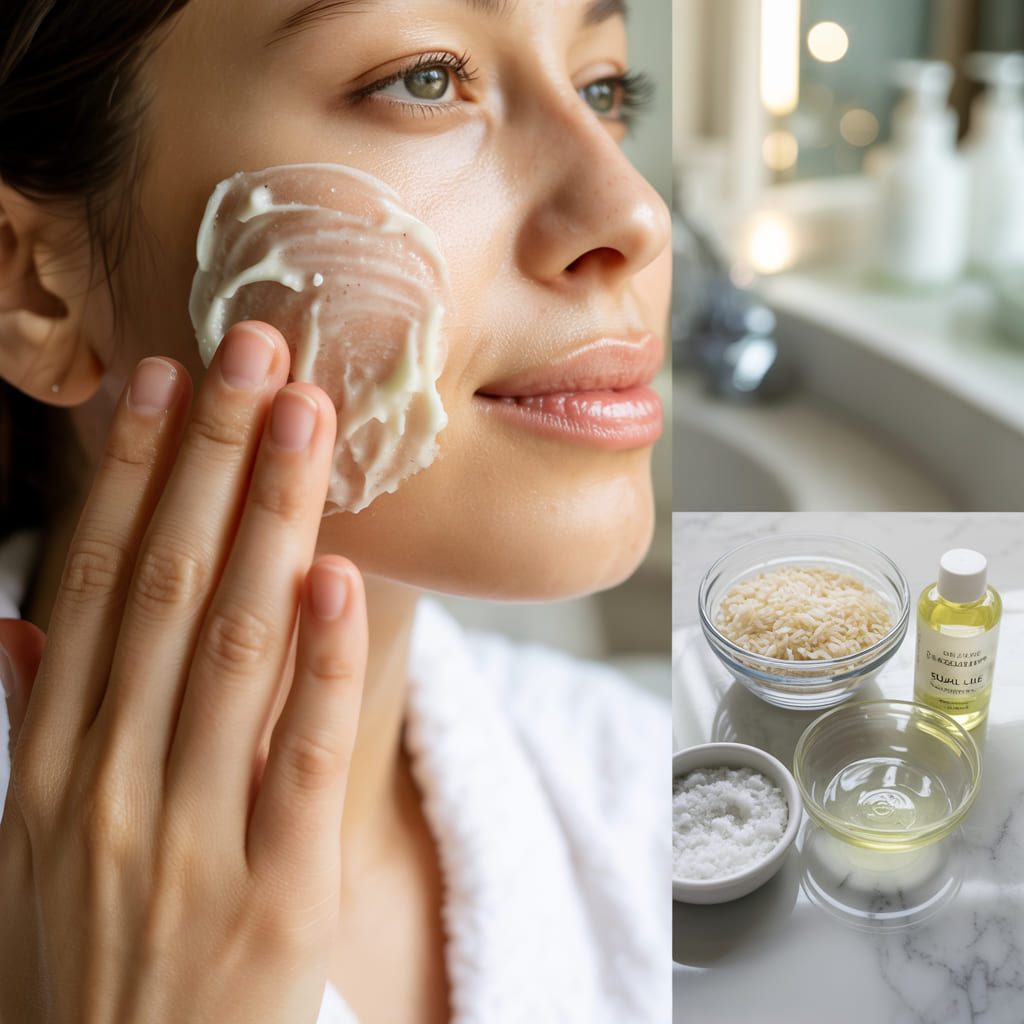
- Massage a small amount across damp skin using gentle, steady motions.
- Focus on areas where makeup tends to catch or shift, usually the nose, chin, and lower cheeks.
- Rinse thoroughly and allow the skin to settle for a minute before applying moisturizer.
This is not a treatment for deep exfoliation. It is a surface adjustment, nothing more.
What Happened the First Time I Used It Before Applying Makeup
The first test was surprisingly revealing. My moisturizer absorbed more predictably. My sunscreen layered without pilling. My foundation spread in a uniform sheet without clinging to invisible patches or gathering in areas I didn’t know had texture.
There was no resistance between my brush and the skin. Everything moved as it was supposed to, and the final result looked more coherent than it had in months.
More importantly, the makeup lasted longer because the base had not been disrupted by underlying texture. The micro-exfoliant removed the thin layer that usually caused slip, so the foundation settled more evenly and held its position throughout the day.
The change wasn’t dramatic in the way new makeup products can be dramatic. It was subtle and structural. It’s the kind of improvement that becomes noticeable only because nothing goes wrong.
Why This Step Works Better Than Adjusting the Amount of Makeup
Before creating this micro-exfoliant, I tried solving the texture problem by changing my makeup application. I experimented with lighter layers, heavier layers, different tools, and different prep products.
None of those adjustments solved the real issue because the problem wasn’t the makeup. It was the layer beneath it. Makeup cannot compensate for micro-buildup. It only responds to the surface it is given.
By correcting the surface instead of adjusting the foundation, I eliminated the need to troubleshoot products that were never the cause of the issue. This made my entire routine more reliable. When the base consistently interacts with clean, even skin, every makeup product performs closer to its intended design.
How This Step Fits Into My Routine Without Slowing It Down
One of the advantages of creating a micro-exfoliant rather than relying on deeper exfoliation is that it takes almost no time. It fits naturally into the cleansing stage.
I mix a small amount in my palm, apply it gently, and rinse it off in less than a minute. It doesn’t create redness or sensitivity, so it doesn’t require downtime. It simply resets the surface and clears the way for the next step.
This makes it ideal for makeup days when I do not have the patience for a long prep routine. The scrub works quickly, predictably, and without altering the overall flow of the morning.
A Closing Reflection
The micro-exfoliant I created became one of the most essential parts of my makeup routine because it corrected a small but persistent issue that disrupted everything placed over it.
It showed me that problems in a routine often come from overlooked details rather than major missteps.
This pre-prep step works because it respects the skin’s balance, intervening only at the level where makeup requires cooperation. Sometimes the most effective solutions are the ones that remove, not add.