One time, a friend took a picture of me without warning. I didn’t pose for it. I wasn’t thinking about angles, posture, or lighting. I didn’t prepare my outfit intentionally.
It was just a candid moment captured while we were out, and I didn’t think about it again until later that evening when the photo appeared on my phone. I opened it expecting to critique the usual things people often notice about themselves. But that isn’t what happened.
Instead, I studied the photograph because something about it looked undeniably accurate. Almost more accurate than the way I saw myself in the mirror, which surprised me enough to look again.
It wasn’t the expression. It wasn’t the setting. It wasn’t even the outfit itself. It was the proportion.
For the first time, I saw the way the clothes interacted with my body in a context I could not replicate in a mirror: natural posture, full lighting, distance, and movement caught mid-step. That single photo became the starting point of understanding what actually suits me.
Mirrors Show Intention, Photographs Show Reality
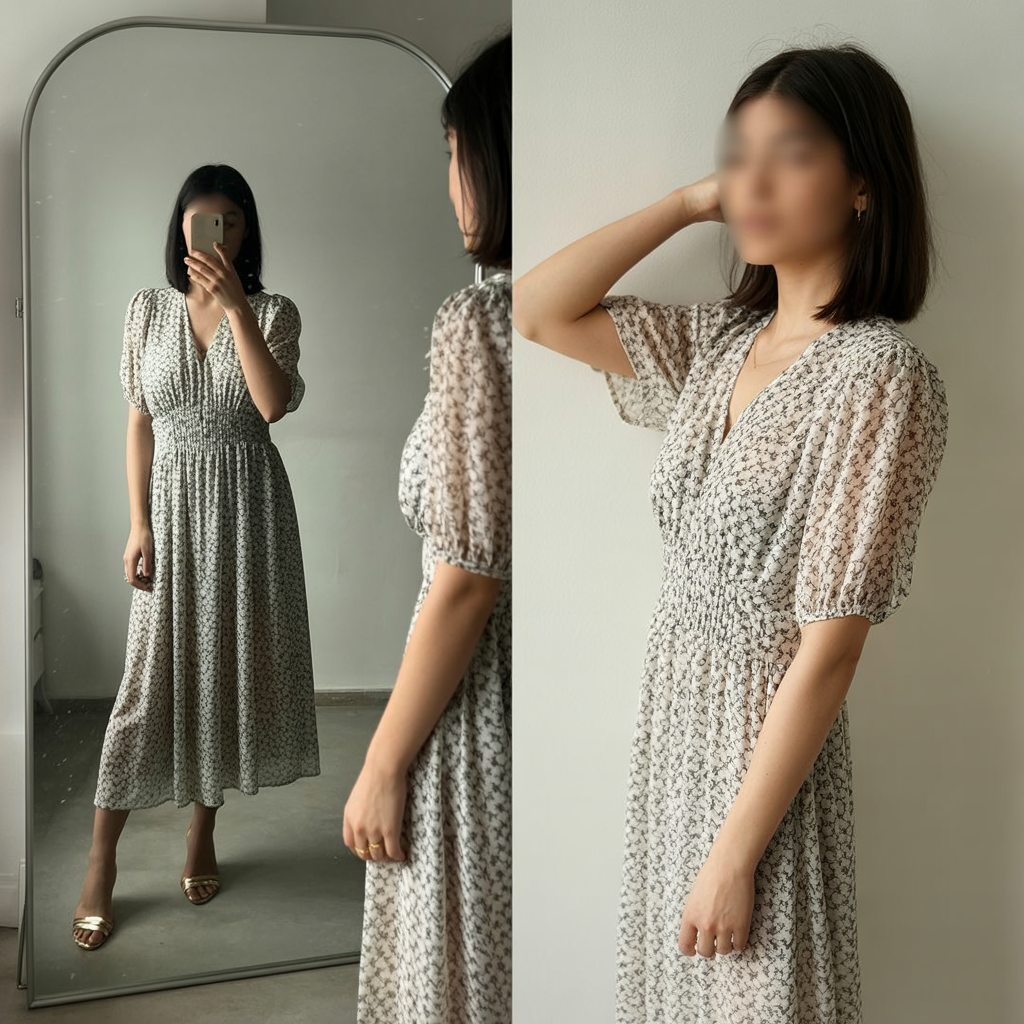
When you look in a mirror, your posture changes. You adjust your shoulders, straighten your spine, tilt your chin, or shift your weight slightly to one side. You create alignment because mirrors invite correction. They are not neutral observers. They are interactive tools.
A photograph, especially a candid one, removes intention. It captures how you exist in the environment rather than how you present yourself to a reflection. That difference matters.
This clarity is uncomfortable at first. You cannot adjust mid-photo. You cannot refine angles. You cannot fix the moment before it’s captured. But that lack of control makes the photograph more useful than any mirror.
It shows the truth of the outfit, not the ideal.
What I Saw in That Photo That I Had Never Noticed Before
In the photograph, my clothes weren’t wrong. They weren’t ill-fitting. They weren’t unflattering. But they created a vertical line that extended too far without interruption.
The result was a silhouette that seemed to stretch downward, making me appear longer in certain areas and narrower in others. I had never seen this imbalance in a mirror because I had never caught myself mid-movement from several feet away.
I realized that:
- long unbroken lines make my upper body look heavier than it is
- certain shapes collapse when photographed outdoors
- structured pieces suit my natural posture better than draped ones
- specific necklines shift my proportions more than I expected
- color placement matters more on me than color itself
How a Single Photo Helped Me Redefine Proportion
Proportion is something you can easily overlook when relying on mirrors. You only see yourself from the distance of an arm’s length. You do not see the relationship between your clothes and your body in full scale. A photograph changes that.
These details helped me understand that the outfit wasn’t wrong. It was incomplete. It needed grounding. It needed structure at the midpoint. It needed a separation of vertical lines that mirrors didn’t reveal.
That one photograph became an unexpected guide to building proportion the way it exists in real life, not the way it looks in controlled lighting.
Why Seeing Yourself From a Distance Changes Everything
Most people underestimate the value of distance. Clothing interacts with your body differently when observed at three feet, six feet, or eight feet away. From a distance, the eye reads shape before detail, silhouette before texture, and proportion before color.
That photograph helped me understand how my outfits read in real environments. It taught me that certain shapes collapse in bright light, that some clothes lose definition when the wind moves them, and that specific fabrics reflect differently outdoors.
The distance in the photo made me understand something essential about what suits me: I need pieces that retain shape without relying on perfect posture. That has influenced every clothing choice since.
The Small Details Photographs Reveal That Mirrors Hide
There are elements of style that you can only see when you’re not in control of the moment. A candid photograph makes these details immediate and honest.
The photo revealed several things I had overlooked for years:
- how a neckline adjusts when you move naturally
- how sleeves shift when your arms aren’t posed
- how hems interact with shoes while walking
- how midsection proportions change when your posture relaxes
- how fabric behaves in outdoor light instead of controlled indoor conditions
These are the difference between clothes you think suit you and clothes that actually do. Mirrors show intention. Photographs show reality. Both have their place, but only one reveals the truth you need for consistent style.
Why You Only Need One Truly Honest Photograph
People often assume they need dozens of pictures to understand their style. But one honest photograph taken in natural lighting, from a realistic distance, and without posing often reveals more than an entire album of curated images.
A single photo can show:
- how you naturally stand
- how clothes respond to movement
- how proportions read from a distance
- how textures behave in real light
- how balanced or unbalanced an outfit truly looks
Once you see this, you cannot unsee it. The clarity remains. It guides your choices even when you’re not consciously thinking about it. This is what happened to me. That photograph didn’t flatter me. It informed me.
How This Changed the Way I Shop
After understanding what really suits me, I stopped buying clothes based on trends, colors, or styling potential. Instead, I focused on how pieces were likely to photograph in real environments. That doesn’t mean chasing aesthetics. It means predicting proportion.
This approach prevents impulse purchases. It also prevents disappointment. I buy fewer pieces, but each one aligns with what I already know works because the photograph taught me what “works” actually means for my proportions.
A Closing Reflection
I didn’t expect a single candid photograph to shift my understanding of my own style. But that image showed me something mirrors never could: the truth of proportion, posture, and presence as they appear in ordinary life.
What suits you is not what looks good in the mirror under controlled conditions. What suits you is what maintains its structure, balance, and intention when captured without preparation.
The moment you see yourself clearly, you stop chasing what suits others and start choosing what suits you.