
There was a long stretch when my mornings felt inconsistent in a way I couldn’t explain. The routine itself had not changed. I still followed the same sequence: skincare, concealer, light definition around the eyes, a structured brow, and a quick decision about clothing.
Yet the experience of moving through those steps varied dramatically. On some mornings I moved with clarity and steadiness, finishing everything smoothly and on time. On other mornings, the same routine seemed to stretch, scatter, or feel strangely uncoordinated.
For weeks, I assumed the inconsistency came from sleep quality, temperature, or mood. Those factors usually influence pace. But none of them explained why certain mornings felt cohesive even when I was tired, while others felt disorganized despite having plenty of time.
The answer revealed itself on a morning when I began getting ready in complete silence, simply because I forgot to turn on music. Without the background rhythm, I could feel myself moving slower, thinking more, and hesitating between each step.
That contrast made me pay attention. The only difference between my efficient mornings and my scattered ones was music.
Music Shapes Pace Before It Shapes Mood
Once I noticed the pattern, I stopped attributing my good mornings to energy or motivation. The presence of music had nothing to do with emotion. It altered the mechanics of my routine long before it affected anything else.
When there was music, my actions followed a natural tempo. My hands moved steadily rather than sporadically. My posture remained centered rather than shifting. I transitioned between steps without drifting into unnecessary pauses.
What surprised me most was that the music didn’t need to be uplifting or emotionally charged for this to happen. Even neutral, steady sounds regulated my pace in a way silence never did.
The rhythm organized my movements in the same way a metronome organizes practice for a musician. Without rhythm, the pace defaults to whatever internal state you wake up with. With rhythm, movement aligns itself automatically.
The Morning I Tested It on Purpose
After noticing the pattern, I decided to test it deliberately instead of relying on accidental observation. I spent one morning in complete silence, repeating my full routine with no external sound.
Everything took longer. Blending felt inconsistent, not because of technique but because my pace varied without structure. I paused between steps more often than usual. Small decisions about products or clothing stretched longer than necessary.
The next day, I played a playlist with a steady mid-tempo rhythm. The difference was immediate. My movements became synchronized without effort. I blended efficiently, transitioned smoothly, and moved through the routine with a sense of continuity I hadn’t realized depended on sound.
The experiment confirmed what the accidental silence had suggested: Music is a stabilizer.
Why Rhythm Creates Order Without You Noticing
Music works because its structure becomes a substitute for the internal clock your mind cannot maintain consistently. A song’s rhythm regulates attention, suppresses unnecessary hesitation, and organizes movement into a predictable pattern. The structure of a song becomes the structure of your routine.
This is about the body unconsciously syncing with rhythm. When your movements match the tempo of the sound in the room, the entire routine becomes smoother and more uniform.
This is why makeup application, in particular, improved so noticeably when music played. Blending techniques rely on repetition. When the repetition is guided by rhythm, the outcome becomes more consistent.
Silence, on the other hand, creates variability. Movement speeds up or slows down depending on thought patterns rather than actual needs. Rhythm eliminates that variability.
Why Certain Music Works and Other Music Doesn’t
Over time, I began noticing that not all music regulates pace in the same way. Songs with sudden shifts, dramatic builds, or unpredictable timing created inconsistency instead of structure.
My movements reflected the irregularity. My pace changed mid-routine. I lost the steadiness the morning required.
But music with a consistent tempo, moderate energy, and minimal fluctuation created an ideal environment. It gave the routine a natural pace that neither rushed me nor slowed me down. The music didn’t need to be inspiring or meaningful. It only needed to be steady.
The reliability of the sound translated directly into the reliability of the routine.

Music Stabilizes Posture More Than I Expected
One of the most unexpected observations came after months of paying attention. Music significantly affects posture.
Without it, I shift frequently. I lean into the mirror too much. My spine curves forward or sideways, interrupting the alignment needed for steady application.
With music, my posture remains more centered and consistent. Not because I am consciously adjusting it, but because rhythm naturally aligns physical movement.
Once you notice how posture interacts with routine, the influence of music becomes even clearer.
The Simple DIY That Enhanced the Experience
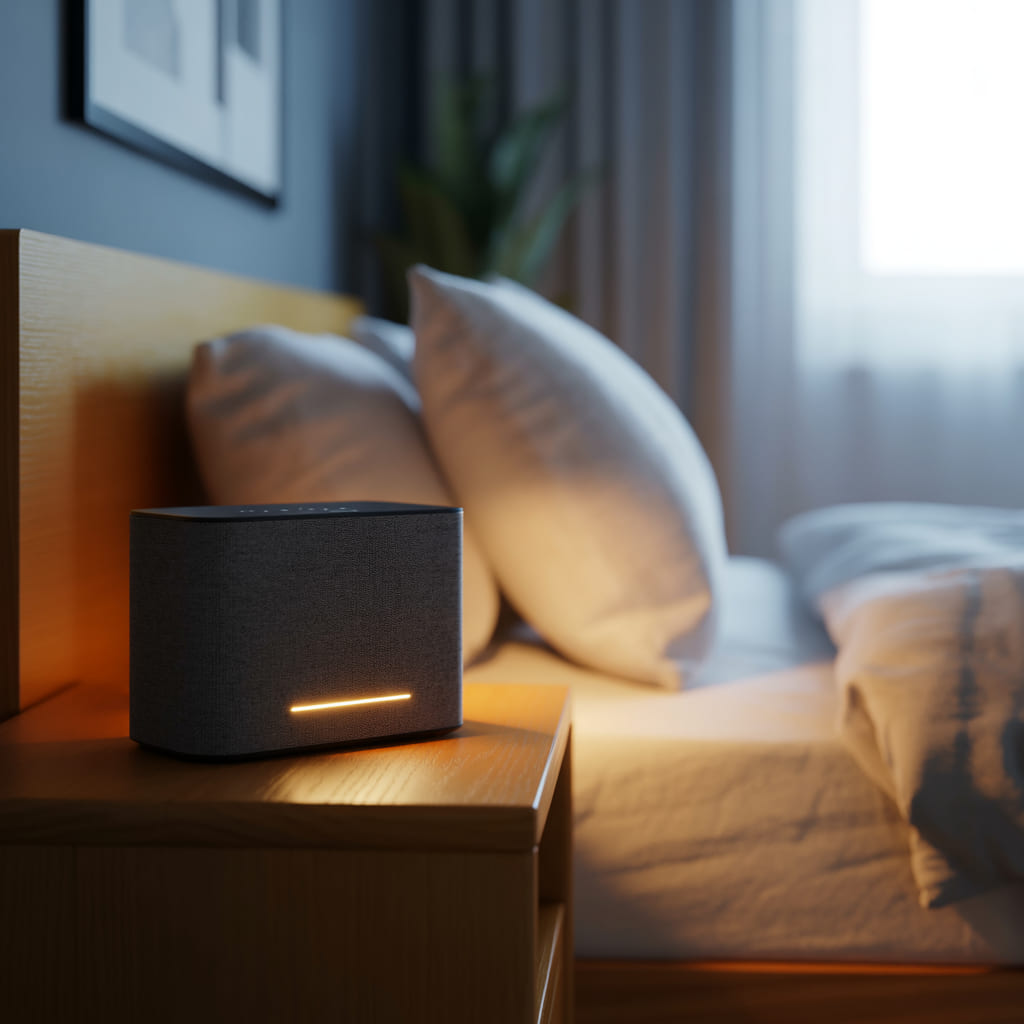
After observing how strongly music influenced my mornings, I began refining the way I incorporated it. I reorganized the placement of my speaker so that the sound spread evenly across the room rather than echoing from a single corner.
Then I created a short sequence of songs that served as a timekeeper. Not a long playlist that faded into background noise, but a structured progression that guided the entire routine from beginning to end.
This became my Ready-in-Rhythm method, a simple arrangement that uses music as a functional tool rather than entertainment. It isn’t based on mood. It’s based on pacing.
The Ready-in-Rhythm Method
- The first song carries me through skincare and initial preparation.
- The next covers complexion and blending, where rhythm matters most.
- The third supports detail work such as eyes and brows.
- The final track marks the transition into hair and getting dressed.
The playlist lasts just long enough to move through each stage without feeling rushed. It gives the morning a consistent structure that frees me from relying on time or attention span.
The method became a quiet framework I could rely on even on days when I felt unfocused or tired.
A Closing Reflection
I used to think that getting ready depended entirely on time, tools, and technique. But over the past year, I’ve learned that rhythm shapes the process in ways I never thought to examine.
The unexpected role music plays in my routine is not about emotion or enhancement. It is about structure, the kind of structure that makes the morning feel grounded, steady, and repeatable.
Once you understand how sound regulates movement, the entire experience shifts. The morning becomes less about controlling your routine and more about letting rhythm hold it together.
Sometimes the smallest, quietest variable ends up having the greatest influence.