There are certain days when the air feels dry before the weather reports even acknowledge it. I can sense the conditions shifting when my lips begin to tighten slightly, long before I apply anything. On those days, matte lip products behave differently.
They do not glide the way they should. They do not settle evenly. They highlight micro-lines that normally remain invisible. And in the worst cases, they begin to crack as the day continues, breaking apart at the center of the lips regardless of how smooth the surface appeared at the start.
If the lips are even slightly dehydrated, any matte formula begins to exaggerate the issue. It doesn’t matter how hydrating the product claims to be; matte texture is unforgiving, and dry air amplifies everything.
Once I recognized this, I knew I needed something more precise than a balm and more intentional than a lip mask. I needed a base layer designed specifically for matte days under dry conditions. Something thin, controlled, and soft enough to prevent cracking without transforming the finish itself.
Why Traditional Lip Balms Interfere With Matte Texture Instead of Helping It
My first instinct was to layer a light balm under matte products, but that only created new problems. Even the thinnest balm adds slip, which disrupts the structure of a matte finish. The color does not anchor properly. Movement becomes inconsistent. Wear time shortens.
Matte finishes rely on adherence. They stay in place only when the surface is free of excess oil. But during dry weather the lips require support, and most balms provide that support by adding an oily layer. The formula and the lips end up working against each other.
I needed something that wasn’t a balm, wasn’t a gloss, and wasn’t a mask. I needed something that could sit invisibly beneath matte color, providing only surface flexibility without shine or oil. In other words, I needed a soft-matte base, not a balm base.
The Morning I Decided a New Formula Was Necessary
I remember the exact day I committed to creating a new layer. The air was so dry that even my moisturizer absorbed faster than usual. When I applied my matte lip product, it looked smooth for a moment and then immediately began emphasising the texture the product usually ignores.
I removed the product, smoothed the lips with a damp cloth, and re-applied. The same result appeared. I realized that unless I changed the surface beneath the matte, the matte would continue to behave according to the environment, not according to its formula.
That moment of clarity pushed me toward experimenting with a base that could soften the lips’ surface without adding shine. I wanted something that would act more like a flexible anchor than a moisturizing layer.
Designing a Soft-Matte Lip Layer That Supports Texture Without Altering Finish
The key to building the right formula was understanding that matte products require a stable, uniform surface. Any variations in texture disrupt the structure. So the base layer needed to do three things:
- It needed to hydrate without softening the outermost layer too much.
- It needed to sit thinly enough that no shine appeared.
- It needed to add flexibility rather than density.
The solution became clear when I considered how certain face primers work. They remove drag without creating slip. They soften the top layer without adding shine. They remain invisible while stabilizing texture.
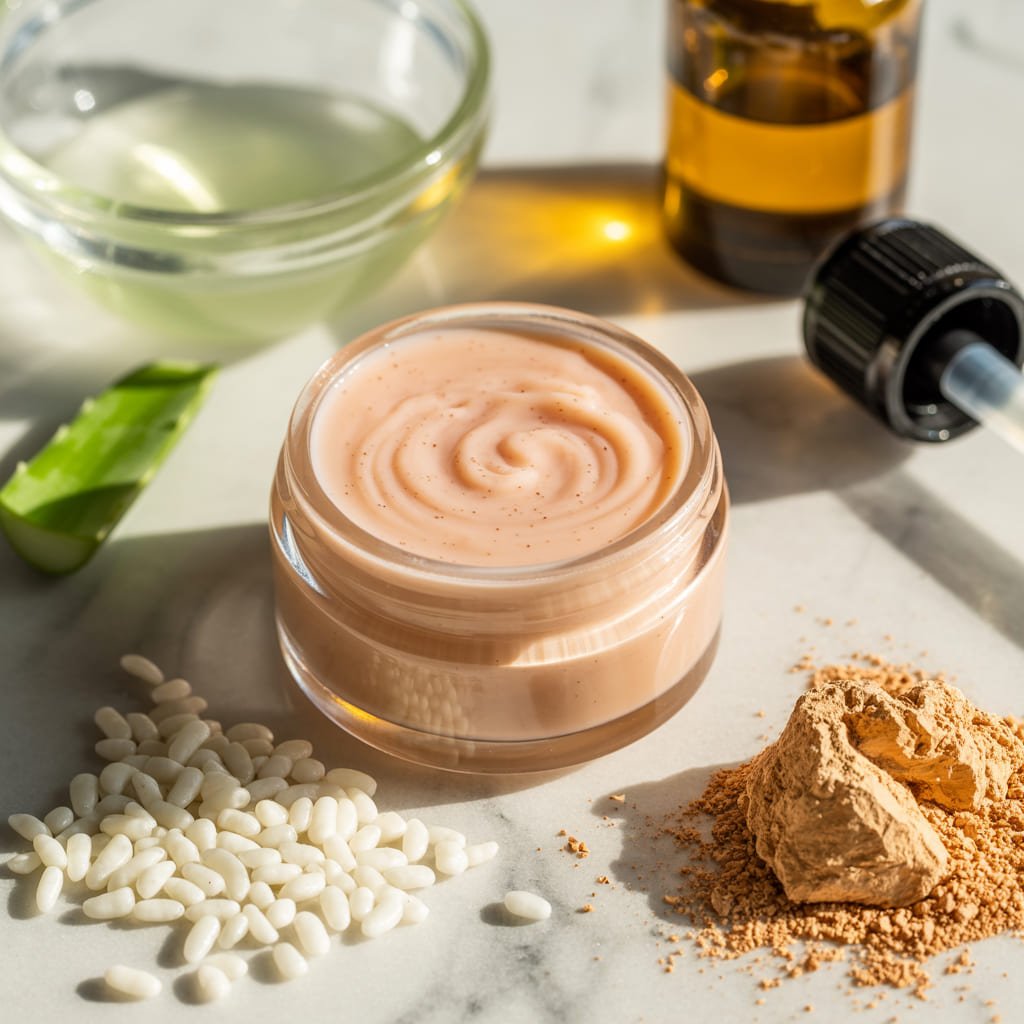
Through experimentation, I discovered that a combination of aloe, a very small amount of plant-derived wax, and a tiny fraction of a dry oil created exactly the effect I needed.
The aloe provided hydration without luminosity. The wax offered structure without thickness. The dry oil introduced flexibility without slip. Together, they created a soft-matte lip layer that held the surface steady even in dry conditions.
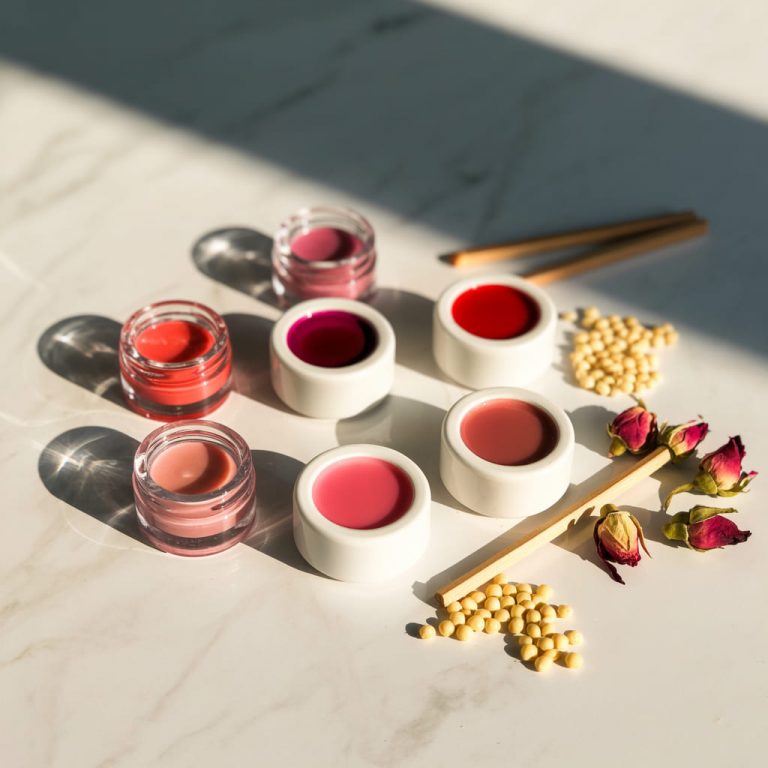
Here is the exact recipe:
Ingredients:
- 1 teaspoon aloe gel
- ¼ teaspoon cosmetic-grade rice bran wax (or another ultra-light plant wax)
- ½ teaspoon squalane or jojoba esters (not regular jojoba oil)
- A pinch of fine arrowroot powder
How I Make It:
- Melt the rice bran wax gently until it softens but does not fully liquefy, because too much heat alters the texture.
- Fold the softened wax into the aloe until it forms a smooth, uniform blend.
- Add the squalane and mix until the formula becomes thin yet cohesive, remaining matte rather than glossy.
- Finish by blending in a tiny amount of arrowroot powder until the mixture reaches a velvety consistency that disappears on the lips without shine.
How I Use It:
- Apply a very thin layer to clean, dry lips.
- Allow it to settle for one to two minutes until the surface becomes matte and even.
- Apply matte lip color directly on top without blotting, because blotting removes the flexibility the formula provides.
This creates a surface that is smooth enough for color to adhere to but flexible enough to prevent cracking.
What Happened the First Time I Applied Matte Lipstick Over This Layer
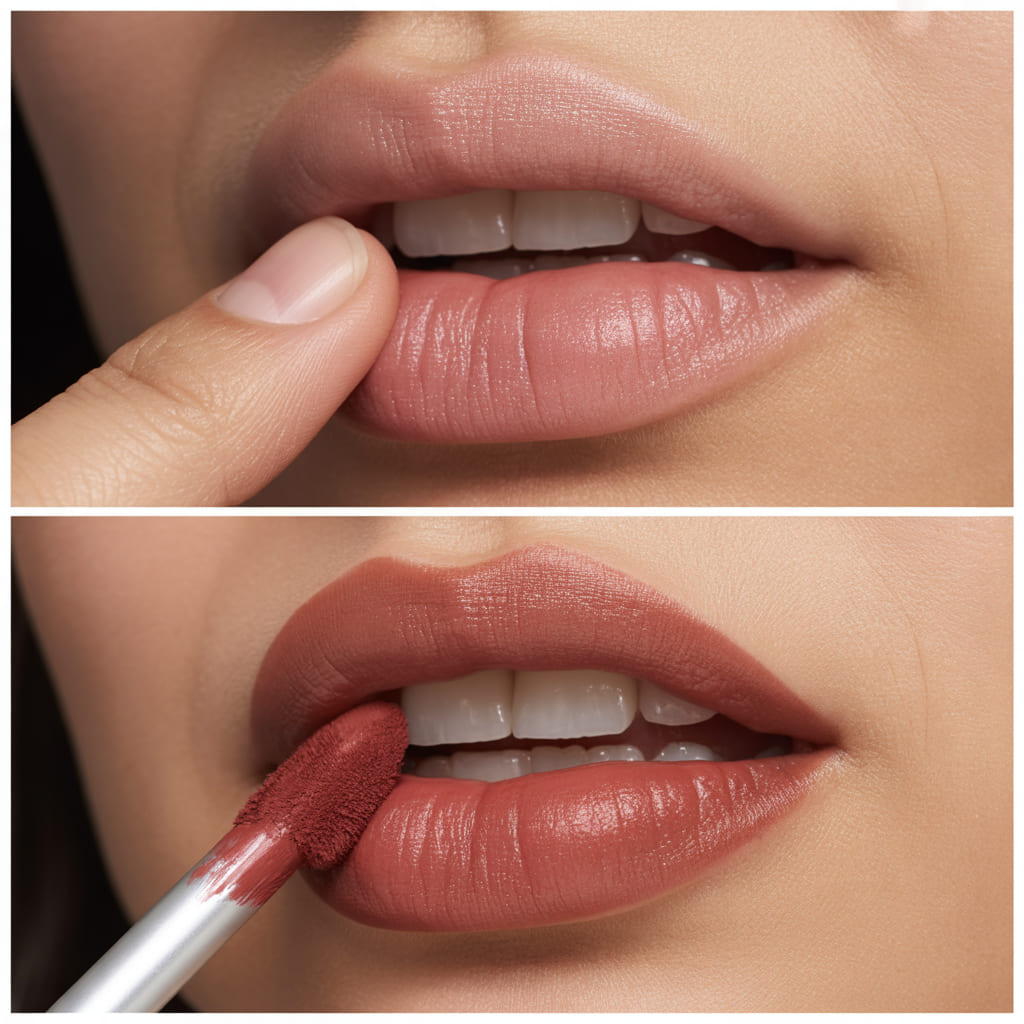
The first test surprised me. The matte lipstick glided on more predictably than usual, not because the mixture made the lips slick, but because the surface became uniform.
There were no micro-patches where the pigment sank deeper. There were no areas where the matte clung too tightly. The product moved as a single layer, which made the result look more controlled.
The real difference appeared several hours later. The color remained intact, but the surface no longer felt tight. The matte didn’t fracture.
The center of the lips stayed smooth instead of breaking apart. The finish looked exactly the way matte should: soft, even, and stable.
That stability convinced me that this base layer was not a temporary fix but a reliable correction for dry weather.
Why This Formula Works Better Than Using Lip Masks or Heavy Balms Overnight
Many people try to compensate for dryness by using heavier lip products at night, assuming that a moisturized surface will prevent cracking the next day. But matte formulas do not benefit from excess overnight moisture.
They benefit from consistency. Too much moisture can actually make matte products behave worse because it interferes with adherence. The product ends up sitting on a surface that is too soft, causing movement, feathering, or patchiness.
This soft-matte layer solves the problem in real time by addressing dryness on the surface, not beneath it. It allows the lips to remain flexible without becoming overly hydrated. That distinction is why it works.
Matte color behaves best when the lips are stable, not slippery; flexible, not overly softened; prepared, not coated.
A Closing Reflection
The soft-matte lip layer I created is not just a way to make matte formulas more comfortable. It is a way to align the routine with environmental conditions instead of fighting them.
Dry weather exaggerates texture, pulls moisture from the lips, and interferes with adherence. A thin, flexible, matte-supporting layer solves every part of that challenge without changing the finish or the routine.
This step taught me that makeup performs best when the surface beneath it is calibrated for the conditions, not just the product. By creating a base that anticipates dryness rather than reacting to it, I eliminated a recurring problem that disrupted my matte days for years.
Sometimes the smallest layer is the one that holds the routine together.