There was a point one summer when I realized my makeup wasn’t lasting past mid-morning because the air itself was working against me. The heat rose early, humidity thickened the moment I stepped outside, and even with what should have been reliable products, everything shifted.
My skin didn’t look oily, but the makeup moved as if it had no grip. Foundation blurred at the edges. Concealer lost its precision. Cream products softened into a glow that wasn’t intentional.
I didn’t want matte skin. I never have. Powder-heavy looks flatten my features and make my face appear disconnected from the rest of my style. I prefer something closer to my natural skin.
It wasn’t until I paid attention to where the makeup was slipping, not just that it was slipping, that I found the solution. Summer doesn’t create uniform heat. The intensity collects in specific areas, and once I identified those areas, the fix became surprisingly simple.
Summer Makeup Fails Because Heat Collects in Patterns
People often talk about “summer makeup melting,” but it doesn’t melt everywhere. It shifts in the zones where heat concentrates: the sides of the nose, around the mouth, the tops of the cheeks, and the forehead center.
Every time I looked in a mirror on those early hot days, the instability was always in the same places. The rest of my face held up. The product broke down because the temperature wasn’t uniform.
Once I understood this, I realized that applying one product across the whole face wasn’t the answer. The trick had to be localized. That’s how I found the one method that finally worked.
Wet-Setting, Not Powder-Setting
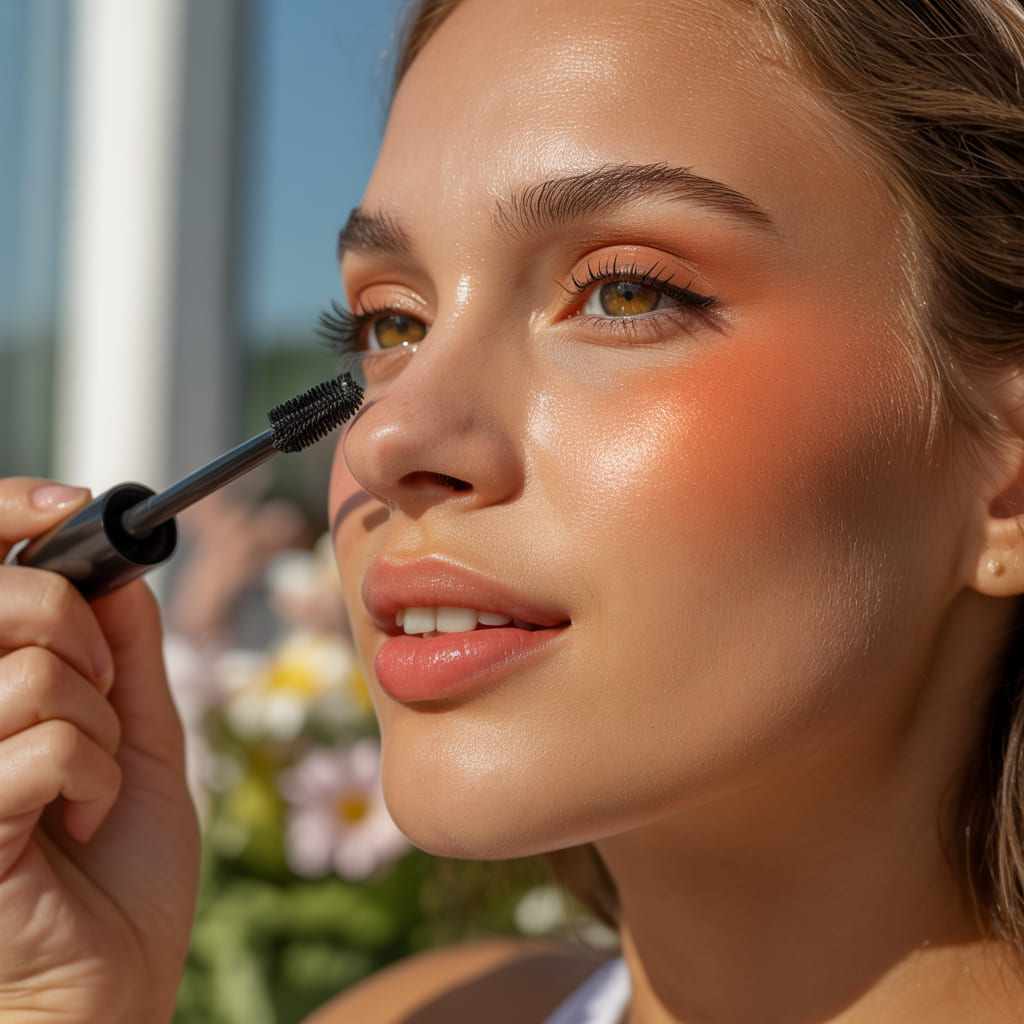
This habit formed unintentionally. I was getting ready one morning in July, and before applying makeup, I misted my face lightly with water to calm the warmth left over from the shower.
My skin still felt slightly damp when I added concealer. I expected it to sheer out, but instead it adhered more smoothly and stayed in place. It didn’t slip as the day went on. It held in a way that felt like the product had fused with my skin without adding heaviness.
That was the moment I realized something important: Makeup applied on faintly damp skin binds better in heat than makeup applied on fully dry skin without forcing a matte finish.
This became my summer trick: wet-setting the makeup in specific zones, not powder-setting it across the entire face.
How I Apply Wet-Setting in My Routine
My routine looks different in summer because the weather dictates more than the products. It dictates the application method. Here is the structure I follow, shaped entirely by trial, error, and environmental observation.
I mist only the areas where makeup tends to shift. For me, those areas are:
- the sides of the nose
- the tops of the cheekbones
- the center of the forehead
- the corners of the mouth
It must be faintly damp, not wet. The product goes on immediately. The dampness forms a thin layer that grips the pigment and prevents the heat from moving it later in the day. I never use this method across my entire face, only in the zones where heat concentrates.
The DIY That Made This Trick Even More Reliable
Once I understood the core method, I started testing different types of mists. Pure water worked well enough, but I wanted something that added a minimal amount of slip, just enough to help products bind without creating patches.
After several trials, I created a simple formula that became part of my summer routine. It’s clean, minimal, and aligned with Juno’s practical approach to beauty.
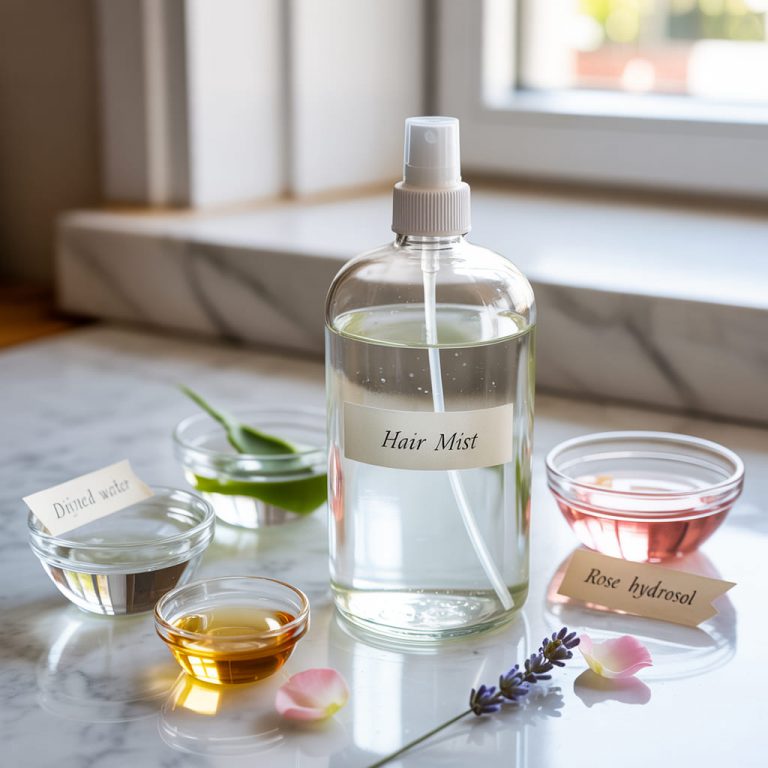
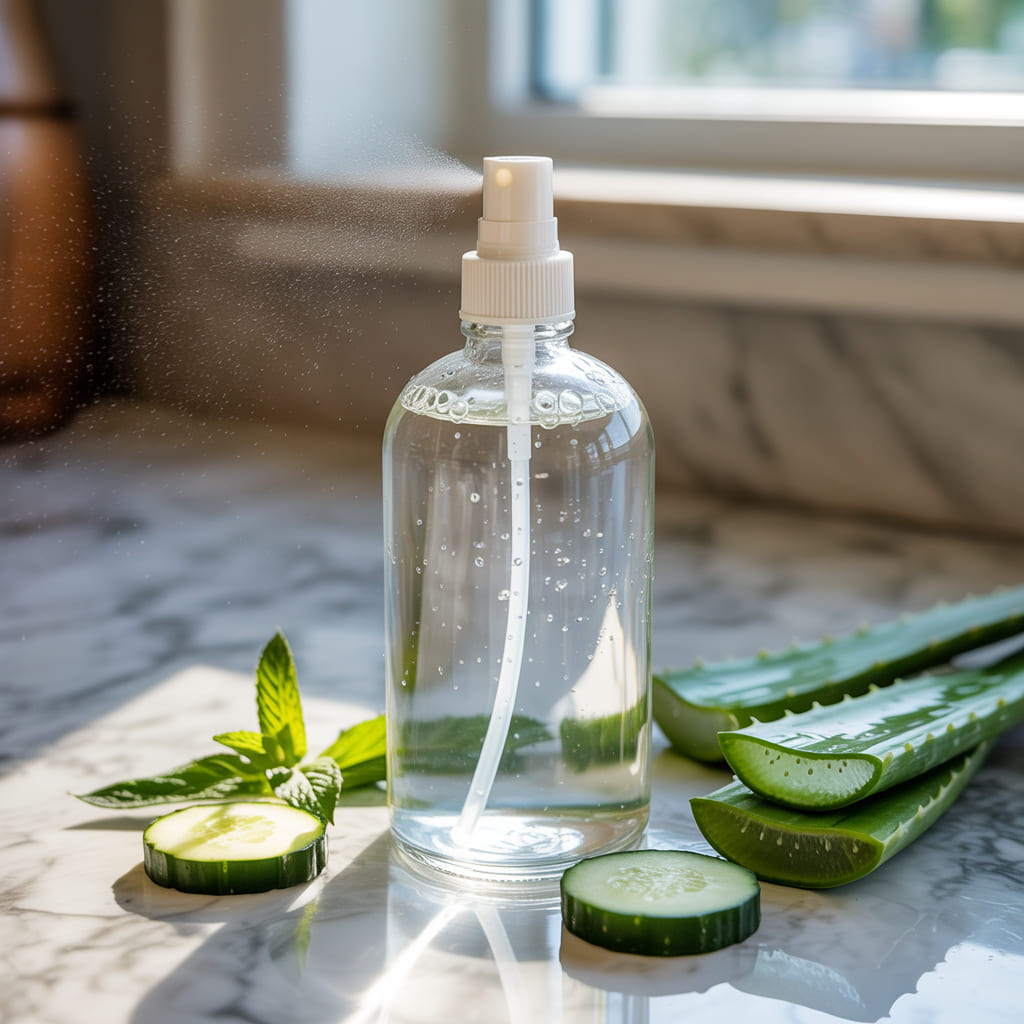
DIY Summer Grip Mist
Creates adhesion without altering finish, perfect for wet-setting
Ingredients
- 1 cup distilled water
- ½ teaspoon glycerin
- ½ teaspoon aloe vera juice (not gel)
- 2 drops of witch hazel (optional, for heat-heavy days)
How I use it
I shake the bottle gently, mist the heat zones once or twice, and apply product immediately. The skin should look barely damp, not wet.
How it performs in summer
This mist has kept my makeup stable through subway heat, outdoor afternoons, and humid evenings. It prevents slipping without altering the glow or forcing matte texture. It’s the first time I found something that supports natural finish in summer rather than suffocating it.
Unexpected Benefits I Didn’t Anticipate
Wet-setting didn’t just stabilize my makeup. It created several secondary improvements I hadn’t expected.
- My skin looked more even because the product adhered more predictably.
- My foundation (on the days I wore it) required less blending.
- My makeup looked like it belonged to my face rather than sitting on it.
- Touch-ups became unnecessary because the heat didn’t interfere.
- The natural finish stayed consistent even after hours outside.
These were practical improvements, not aesthetic ones. They made my routine faster, more reliable, and more repeatable.
A Closing Reflection
Summer makeup can collapse if the routine isn’t grounded in the reality of heat and air. For years I tried to compensate with products that promised longevity but delivered heaviness.
It wasn’t until I watched what heat actually does that I found the method that worked. Wet-setting became the solution because it aligns with physics rather than trends.
It anchors makeup through moisture instead of matte texture. It creates stability without removing dimension. And it remains reliable even in unpredictable weather.
This trick revealed something I return to every summer: the environment dictates more about my makeup than my products ever will.
When you work with the climate instead of resisting it, even the hottest days become easier.