I used to find myself repeatedly picking items up off the floor during my morning routine. Brushes slid toward the edge of the vanity. Droppers rolled in slow arcs until friction stopped them in unpredictable places. Tubes tipped over at the slightest touch.
Everything seemed too eager to move, and the slightest shift in my hand or elbow would send something gliding across the surface. I assumed I was being careless or distracted. For a while I tried to correct my movements by slowing down or placing objects more deliberately.
But the more attention I paid, the clearer it became that the issue had nothing to do with carelessness. The tools were moving because the surface allowed them to.
My vanity counter is smooth and reflective, which makes it visually clean but mechanically unstable. I had been treating this as an unfortunate but unavoidable characteristic of the surface, but after weeks of chasing brushes across the counter, I realized the frustration came from the interruption.
Every time a tool drifted, rolled, tipped, or fell, it fractured the flow of my routine. And flow, for me, is the most important part of a morning.
Understanding Why the Movement Became So Disruptive
When I look back, the issue was always more about rhythm than about tools. A brush rolling across the surface doesn’t ruin anything, but it demands attention at precisely the moment when I cannot spare it.
When a tool moves out of reach, my hand must break its path to retrieve it. When something drops, I have to stop what I’m doing entirely. These are small disruptions, but they scatter the routine in ways that accumulate.
What made the issue more frustrating is that it only happened on mornings when I was already slightly unfocused or moving quickly. In other words, the surface instability amplified the exact moments when I needed stability most.
I began to notice that my most efficient mornings were the ones when I barely touched the surface at all. If my hand movements stayed centered, nothing rolled away. If I placed tools too close to the edge, they shifted immediately.
At that point, I stopped blaming the tools and began analyzing the surface as the mechanical variable it was.
Designing a Surface Mat Based on Movement Rather Than Materials
To solve the problem, I focused on the physical behavior I needed to correct rather than trying to create something visually appealing. The mat needed to eliminate rolling, sliding, and tipping.
It needed to absorb minor movements without gripping the tools so tightly that they felt stuck. It needed to prevent noise, because the sound of items shifting or tapping against the countertop only added more distraction.
These criteria defined the direction of the design. The solution had to be soft enough to create friction but firm enough to remain flat. It had to support smooth objects without allowing them to roll. It had to stabilize tools without interfering with motion.
When I thought about these requirements collectively, I realized that the material needed to behave more like a quiet foundation than a textured mat.
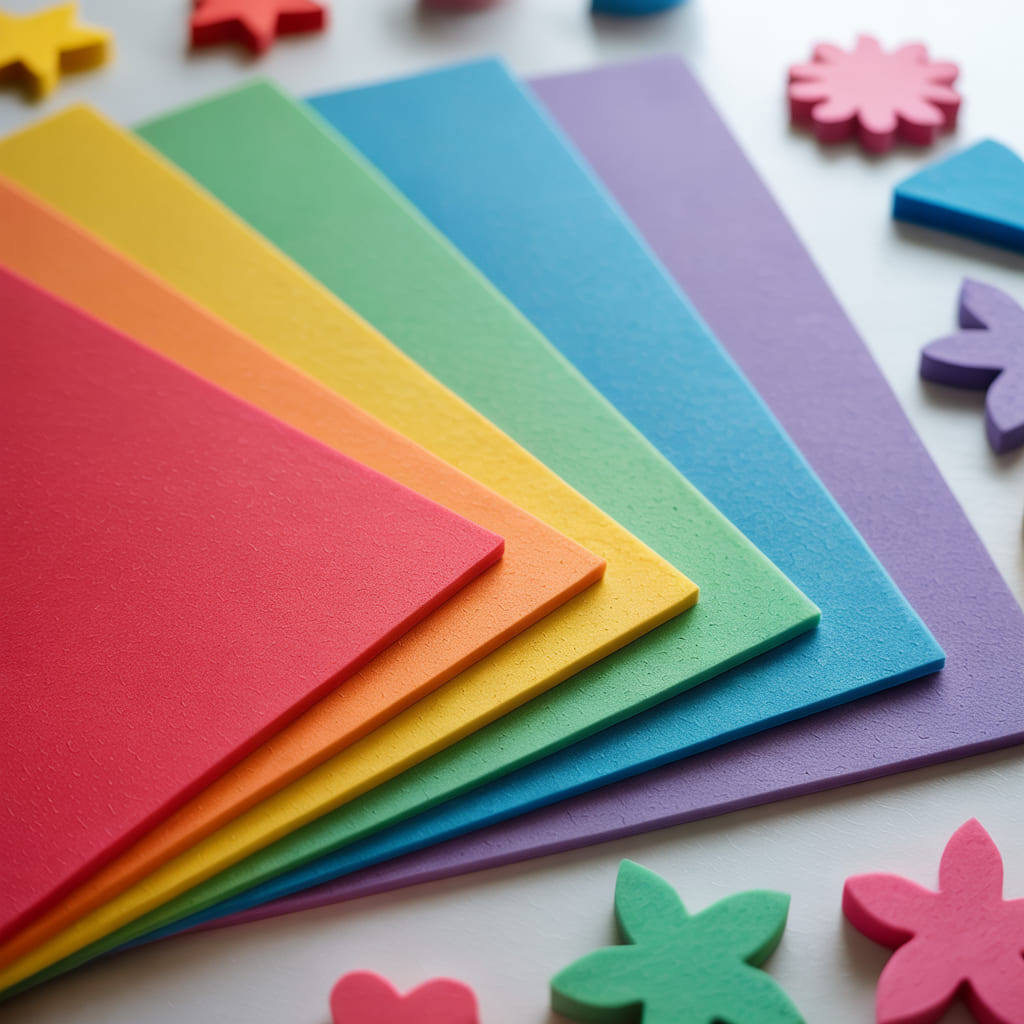
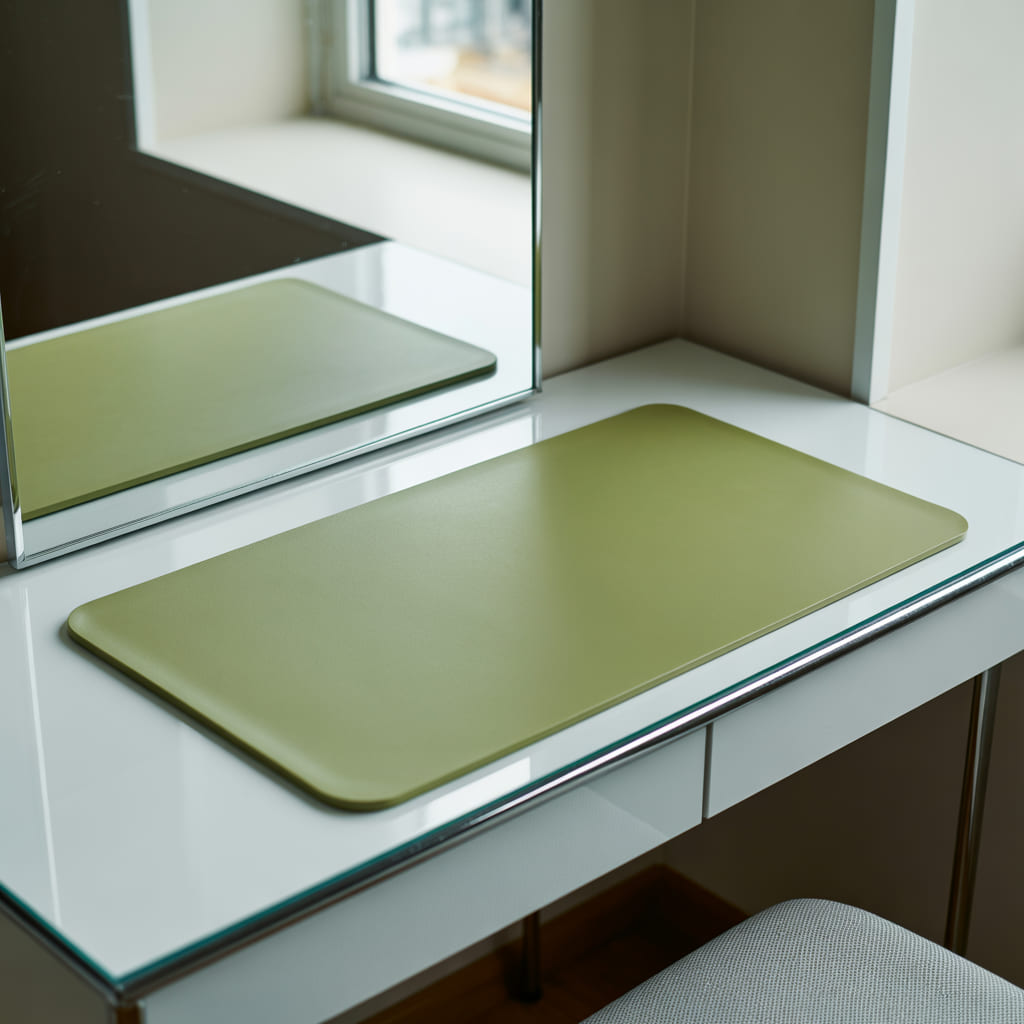
After testing several fabrics, panels, and materials, I discovered that a piece of soft, flexible craft foam offered exactly the right balance. It was smooth but not slippery, cushioned but not bouncy, and stable without creating the visual heaviness that rubber mats tend to introduce.
The foam responded to weight evenly and absorbed vibration, which prevented tools from drifting when I leaned forward or applied pressure to the countertop.
How I Modified the Material to Align With My Routine
The mat itself was only the starting point. To make it functional, I customized it in a way that supported the geometry of my tools. The edges needed to stay flat instead of curling upward, so I reinforced the perimeter with a thin layer of sealing adhesive.
I cut the foam into a shape that aligned with the width of my arm span, creating a surface that accommodated every tool I reach for in the morning without extending so far that it interfered with unrelated items.
The final modification involved anchoring the underside subtly so the mat stayed perfectly still even with repeated pressure. I didn’t want a mat that drifted with use, because that would simply replace one source of movement with another.
Once secured, the surface became a fixed part of the routine environment. It transformed from a temporary addition into a structural component.
What surprised me most was how quickly the mat blended into the space. It didn’t look decorative or intentional. It simply existed in the background, supporting the routine by stabilizing the tools without calling attention to itself.
The First Week Using the Mat Showed Me How Much Energy I Had Been Losing
The change was immediate. Tools no longer moved unless I moved them. Brushes stayed exactly where I placed them. Tubes no longer tipped over.
Droppers remained still even when I set them down at an angle. The absence of motion created a quiet, predictable workspace that allowed my hands to move without interruption.
As a result, I noticed a subtle but significant shift in my behavior. I stopped being cautious about where I placed things. I stopped correcting items that shifted out of alignment. I moved more confidently because the environment was no longer unpredictable.
This made the entire routine more direct. Without the mental adjustments required to manage rolling or shifting tools, I stayed present in the task rather than the environment.
It also changed the pace of the routine. The time saved was not dramatic, but the continuity created a sense of momentum. Instead of feeling like a series of small events, the routine felt like a single uninterrupted sequence.
How the Mat Functions on the Busiest Mornings
The mornings when I benefit most from the mat are the ones when I am moving quickly without the mental space to be careful. On those days, tools are placed down abruptly, sometimes at uneven angles, sometimes with more force than intended.
With the mat, even imperfect movements do not interfere with the routine. Every tool lands securely and stays in its position, which means I can focus entirely on what comes next.
This stability is especially important during steps that require both hands or precise timing, such as blending base products or applying liner. In the past, these steps were sometimes interrupted by the need to retrieve something that had slid away.
Now, the mat holds the environment still so I can work without distraction. The absence of these small frustrations has made the routine feel far more controlled, and control is what allows the routine to stay coherent even on unstable mornings.
Why a DIY Solution Works Better Than Any Store-Bought Option I Considered
Most commercial anti-slip mats are designed for durability or heavy use, which means they are textured in ways that trap residue or create friction levels that fight against natural movement.
When tools stick too firmly to a surface, the routine becomes just as inefficient as when they slide. I needed something that supported stability without eliminating ease.
The DIY approach allowed me to choose a material with exactly the right coefficient of friction. I could also create a mat that fit the exact dimensions of my workspace.
Store-bought options rarely match the width or depth required for a beauty routine, and many introduce visual clutter that competes with the structure I rely on.
By building the mat myself, I created a surface that supports the routine without dominating the environment. The mat stabilizes the tools without altering the flow of movement, which is the key to why it works.
A Closing Reflection
The homemade surface mat is not complex, but it corrected a complex problem. It demonstrated that small environmental misalignments create ongoing inefficiency and that solving them requires observing how movement interacts with space.
The mat succeeded because it was built around the way my hands behave rather than the way a workspace should look.
The lesson I return to often is this: when a routine feels unstable, examine the environment before changing the products.
Stability in the physical space creates stability in the routine, and sometimes the solution is as straightforward as giving tools a surface that keeps them from moving when you do not want them to.