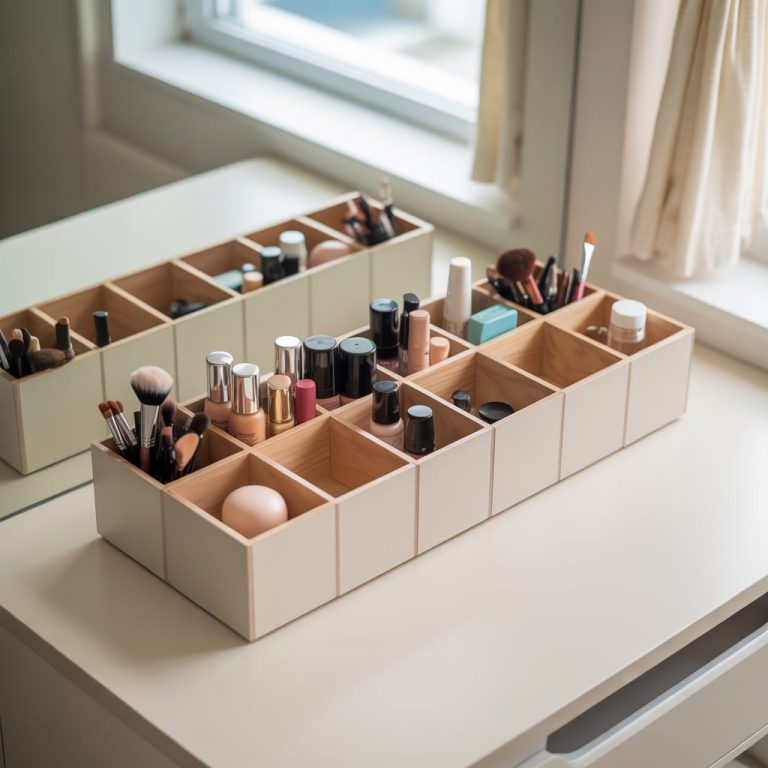
There was a stretch of time when my powder products seemed to blend together in ways I never intended. Even when I used clean brushes, my bronzer would take on a faint rose tone from my blush.
I cleaned the brushes more frequently, thinking the issue was residue. I cleaned the palettes, thinking dust transfer was the cause. I adjusted how I swirled the brush, how much pressure I used, even how I tapped colors off.
But nothing changed. The brushes continued to pick up the wrong shade as if the colors were interacting behind my back.
The problem was not the brush or the formula. The problem was where the brush lived between steps. Once I understood that, everything changed.
Why Powders Travel Even When You Don’t Notice Them
Powder products release micro-particles every time a brush touches them, no matter how gently you press. Those particles drift outward, fall downward, or cling to the closest surface with oil or moisture. That surface is almost always the brush you placed beside the palette.
Powder doesn’t land in neat shapes or predictable lines. It travels according to airflow, humidity, the angle of your movements, and the texture of your counter. This is why powders often mingle even when you think you’re being careful.
But there’s another layer to the problem: brushes are designed to attract product, because their fibers hold on to whatever touches them. Even a single stray particle is enough to alter a shade once it blends into cream or skin.
I realized I needed a solution that acknowledged powder’s natural behavior instead of trying to force powder to behave neatly.
The Morning I Finally Saw the Contamination Happen in Real Time
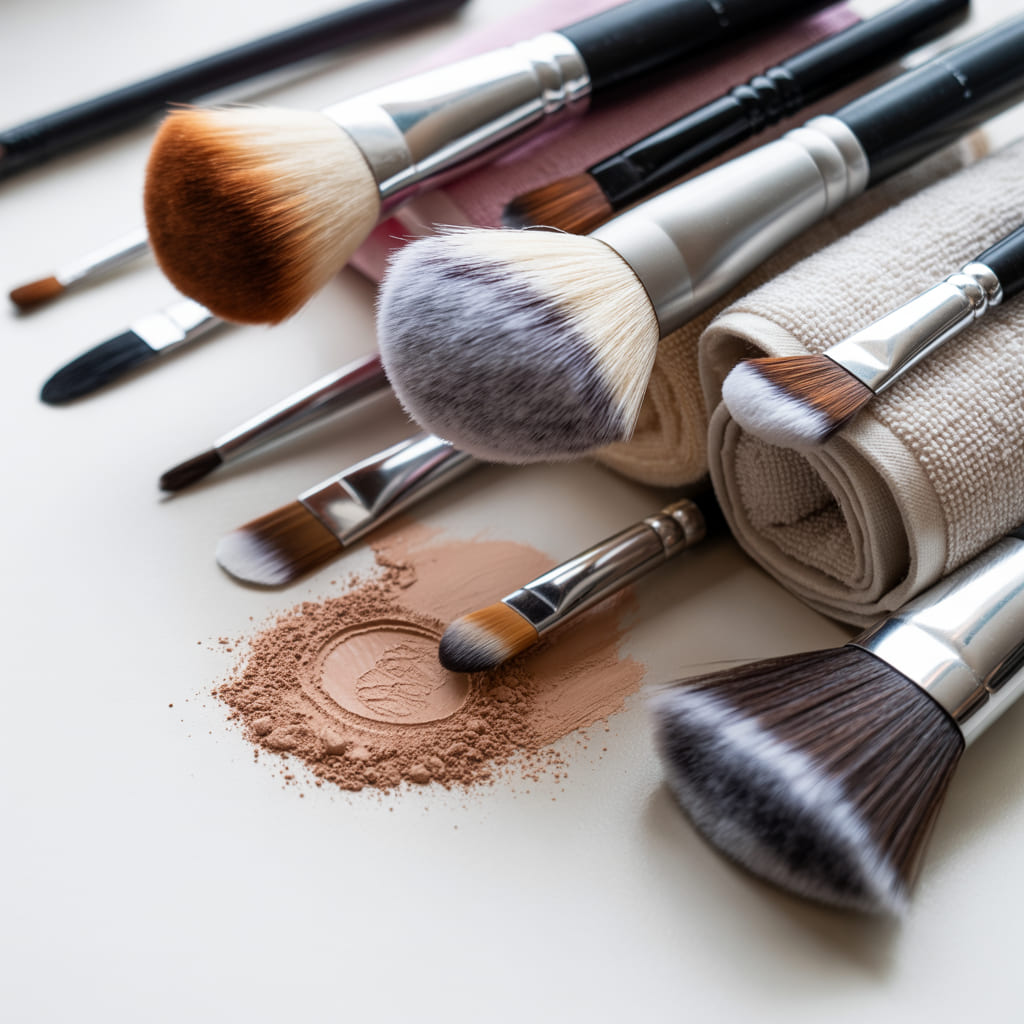
This breakthrough didn’t occur during some special moment. It happened on a random morning when I happened to apply makeup near a window with direct sunlight. The angle of the light made fine particles visible.
I dipped my brush into my setting powder, tapped lightly, and applied it as usual. When I set the brush down beside the palette, a faint cloud of powder drifted across the counter and landed exactly on the section where the handles of my brushes rested.
In that moment, I understood why my supposedly clean brush fibers kept picking up colors I hadn’t touched. The powder settled on the lower portion of the brush, and the next time I held it, the warmth of my hand carried those particles upward into the bristles without me noticing.
I needed a placement method that prevented contact between settling powder and the part of the brush that meets the skin.
The Placement Hack That Finally Solved the Problem
The solution was surprisingly simple once I stopped trying to fight the powder and started working with how it behaves.
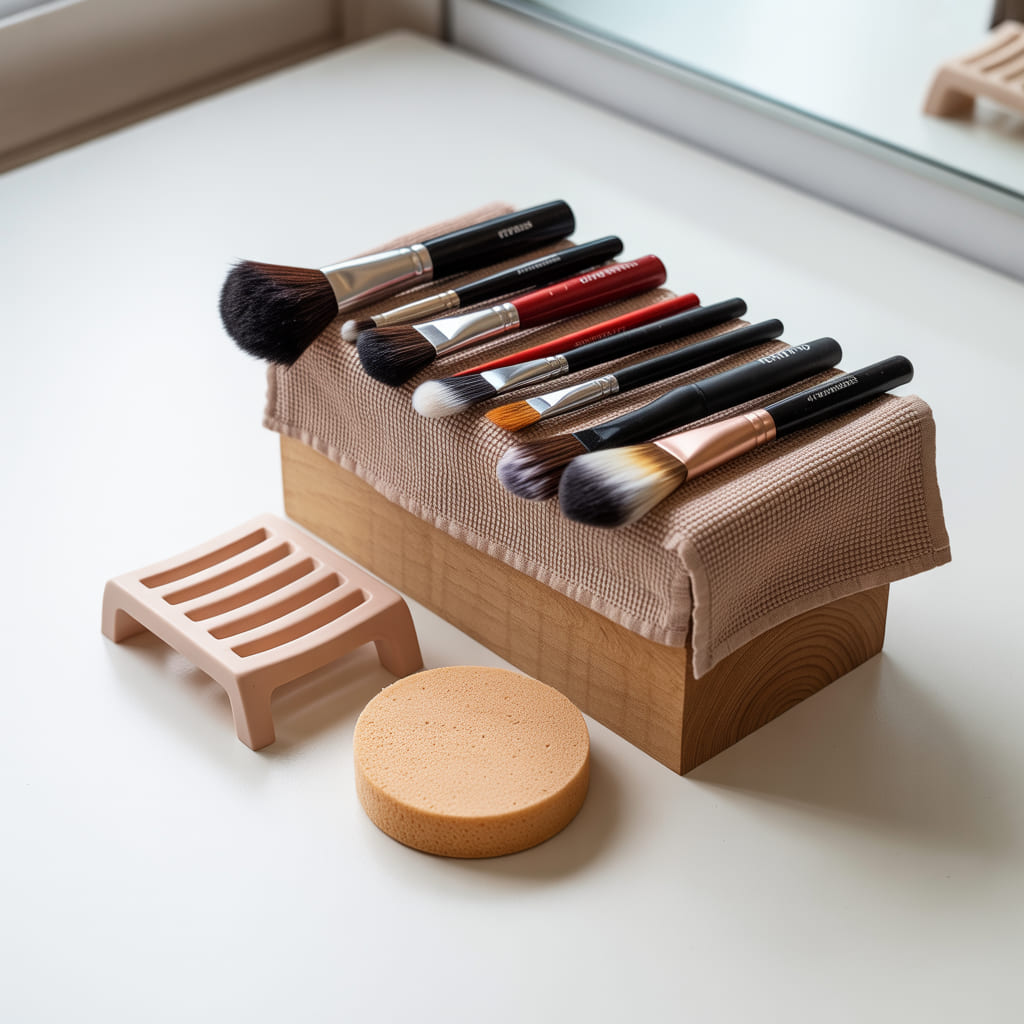
I began laying my brushes with the bristles elevated and angled away from the area where powder is dispensed. Instead of resting them horizontally on the counter, I positioned them on a slight incline using a simple support object so the bristles pointed upward and away from the direction the powder typically travels.
This created a physical barrier between airborne powder and the brush heads. Even if micro-particles drifted, they moved downward and landed harmlessly on the counter or on the lower portion of the handle rather than entering the fibers.
The hack works because:
- Powders fall; they don’t climb.
- Angled elevation introduces a surface dynamic powder does not naturally cross.
- Airflow pushes particles horizontally, but elevation disrupts the landing zone.
Changing the angle of the brush changed the exposure to powder dust. And for the first time, my brushes stopped picking up accidental color.
Why Elevation Works Better Than Distance
Many people try to solve contamination by placing brushes farther away from palettes. The problem is that powder travels farther than people expect. Distance helps, but not consistently. Air movement shifts particles unpredictably.
Elevation, however, removes the bristles from the powder’s natural path. When the brush is angled upward:
- Powder cannot land inside the fibers.
- The exposed surface area decreases dramatically.
- The brush handle becomes the landing point instead, which has no impact on performance.
The goal is not to eliminate powder travel; that is impossible. The goal is to position brushes in a way that powder cannot interact with the part that matters.
The Small DIY Tool That Makes Angle Placement Easy
This is the only section with bullet points, since it’s a DIY component.
What I use:
- A folded microfiber cloth
- A small silicone trivet
- A wooden block
- A soft makeup sponge
Any of these can become a stable incline. The bristles rest upward; the handle rests downward. Powder drifts downward, never upward.
How I position them:
- The bristles point away from the palette.
- The brush lies at a gentle slope, not vertical.
- The angle does not exceed what disturbs the shape of the fibers.
This takes less than two seconds to set up and prevents hours of cleaning.
The First Week I Tried the Hack and Why It Permanently Changed My Routine
The very first morning I used the angled placement, I watched for powder travel with the same sunlight that had revealed the issue earlier. The particles still moved, still drifted, still settled, but this time they fell harmlessly away from the brushes.
By the third day, I noticed something interesting: my powders began lasting longer because less product was wasted through unintended contamination. My brushes stayed cleaner between washes. And the colors I applied were finally true to the pan.
By the end of the week, the method became second nature. The movement required was minimal. What surprised me most was how quickly I stopped thinking about it. The solution integrated into my habits without disrupting anything else.
How This One Adjustment Improved My Entire Makeup Workflow
Correct brush placement changed more than color accuracy. It improved:
- Speed — no more wiping brushes when colors appear mixed
- Precision — every shade applies as intended, without undertones I didn’t choose
- Product lifespan — powders remain cleaner and more hygienic
- Brush health — fewer unnecessary washes prevent wear
- Consistency — no unpredictable shifts in tone
These are small benefits individually, but together they refine the entire routine.
A Closing Reflection
The angled brush placement hack is not dramatic. It doesn’t require new equipment, new formulas, or new skill. It simply shifts the geometry of the routine so that the brushes exist outside the path of airborne powder. It is a structural correction, not a cosmetic one.
And like many structural corrections, it solves a problem that once seemed random and unsolvable.
When brushes stay clean, colors stay true. When placement becomes intentional, everything becomes predictable. And when the environment is accounted for, the routine stabilizes itself.
Sometimes the most powerful improvements in a routine come from noticing what the tools are doing when you’re not looking.