When I began making my own lip colors, I expected them to perform much like the products I used to buy. The color should have sat evenly across the lips, maintained consistency as I moved through the day, and faded predictably rather than gathering into the fine lines.
But almost immediately I noticed something different. The formula behaved well on my hand, and even on the back of my wrist, yet once it touched my lips, it began moving into the micro-lines at the center and edges.
The issue wasn’t dramatic, but the pattern was unmistakable. The color would appear perfectly smooth when first applied and then gradually settle inward as I spoke or pressed my lips together.
At first I assumed the problem was a lack of exfoliation or hydration, so I adjusted my routine accordingly. But even with those changes, the same thing happened. The lines were not deep, and the surface was not dry, yet the color migrated all the same.
Recognizing this distinction changed the way I looked at homemade lip products entirely. Something in the blend was shifting the structure of the formula once it warmed on the lips.
Warmth changes density. Movement changes distribution. And homemade formulas are far more vulnerable to small imbalances than commercial ones. Once I understood that, I began testing with more control.
Why Lip Colors Settle Into Lines (It’s Not About Hydration Alone)
Settling happens for a specific mechanical reason: the formula becomes thinner when warmed, and if it contains too much oil relative to wax or supportive structure, it begins to separate. Once that separation starts, the thinnest part of the mixture travels downward into the tiny channels of the lips.
Most homemade lip products rely on intuitive mixing: a little wax for stability, some oil for movement, and pigment for color. But pigment is heavy. Oil is fluid. Wax is rigid. When the proportion between these elements shifts even slightly, the entire formula behaves unpredictably once exposed to body heat.
I realized that the formula needed a more even balance between its supportive components and its mobile ones. A lip color that remains stable on the lips is the result of precise ratio control.
This understanding is what led me to isolate each component, observe how it behaved individually, and then reintroduce it into the mixture in adjusted proportions.
Why Ratio Matters More Than Ingredient Choice
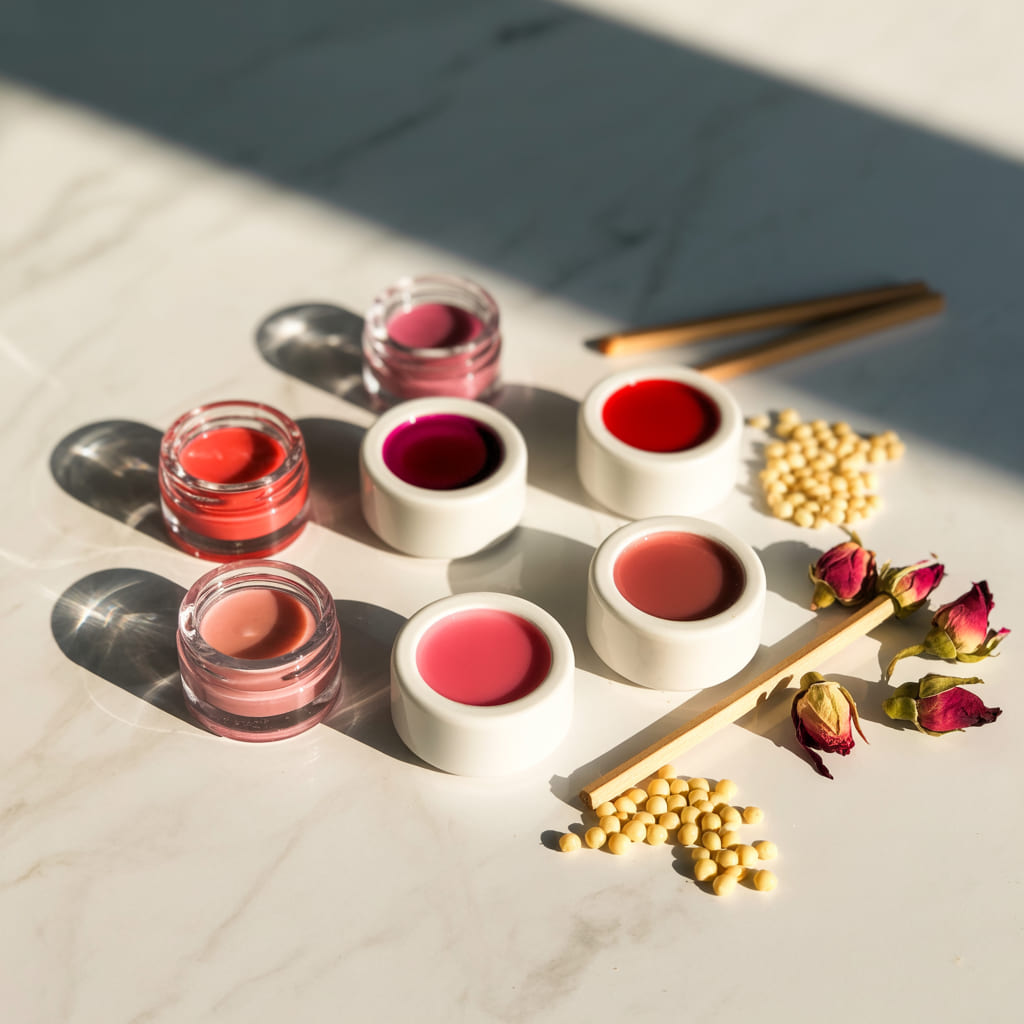
Two formulas can contain identical ingredients and still behave differently depending on their proportions. What ultimately controls the behavior of a lip color is not the specific oil or wax used but the relationship between them.
- A formula with too much oil will migrate.
- A formula with too much wax will feel rigid and emphasize lines.
- A formula with too much pigment and not enough binder will look powdery.
- A formula with too much liquid element will never set.
The correct ratio ensures that the color remains suspended in a structure that supports movement without separation. This means controlling how the formula responds to heat, motion, and pressure.
Once I began adjusting ratios instead of switching ingredients, the entire behavior of my DIY lip colors changed.
The Ratio Shift That Fixed Everything
The most important adjustment was increasing the structural component slightly while reducing the mobile component only enough to maintain softness. This meant adding a little more plant wax, decreasing the oil fraction, and adjusting the pigment blend to remain suspended.
In numbers, it meant shifting the wax from roughly 15% of the formula to 20%, which sounds minor but has a dramatic effect on how the product behaves on the lips. That additional structure prevents the pigment from moving into lines once the formula warms.
It also meant thinning the oil content so that the formula remained spreadable but did not become liquid under normal conditions.
This subtle shift in ratios created a lip color that sat on the lips rather than in them.
The DIY Ratio-Balanced Lip Color Recipe
Here is the version that consistently resists settling into lines.
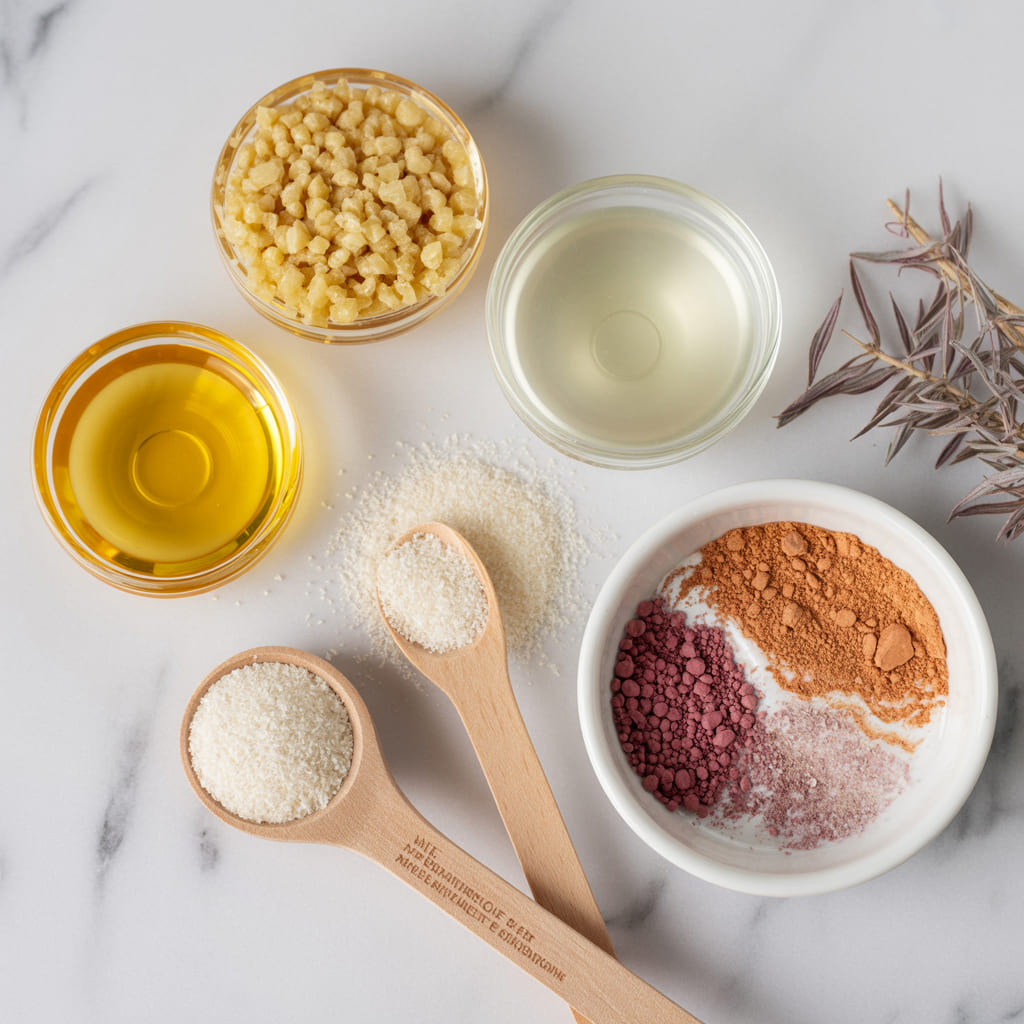
Ingredients:
- 1 teaspoon plant wax (rice bran, candelilla, or carnauba)
- 1½ teaspoons squalane or jojoba esters
- 1 teaspoon lightweight base oil (meadowfoam seed, fractionated coconut, or grapeseed)
- ¼ teaspoon arrowroot powder
- Pigment blend of choice (iron oxides, mica, or beetroot powder)
How I Mix It:
- Melt the wax gently until softened but not overheated.
- Combine the oils separately before folding them into the wax to ensure even distribution.
- Add the arrowroot powder and stir until the mixture thickens slightly as it cools.
- Stir in the pigment gradually until the color disperses evenly throughout the formula.
How I Use It:
- Allow the mixture to cool until semi-solid, then apply a thin layer directly to the lips.
- Press lips together lightly to ensure even distribution without breaking structure.
Once the formula sets fully, it remains smooth instead of sinking.
Why This Adjustment Works in Every Season
Most lip formulas behave differently in warm versus cool environments. But the beauty of this ratio is that it adapts.
The additional structural support prevents melting during warm weather, while the balanced oils prevent rigidity during cold weather. The formula moves with the lips but does not collapse under pressure.
This makes it reliable across:
- Heated indoor environments
- Cold outdoor air
- Humid days
- Dry days
The ratio is not seasonal. It is structural, which makes it stable throughout the year.
A Closing Reflection From Juno Wilde
The solution was not a new ingredient but a new approach. When I corrected the ratio, I solved a problem that had followed me through every DIY lip color I’d made. The formula stopped settling into lines because it finally had the structure to hold its shape under pressure.
This experience reminded me that small adjustments often create the largest improvements. The lip color behaves smoothly now because it has the right relationship between its components, not because it uses special ingredients.
Sometimes the most reliable solution is hidden inside the proportions, waiting to be discovered.