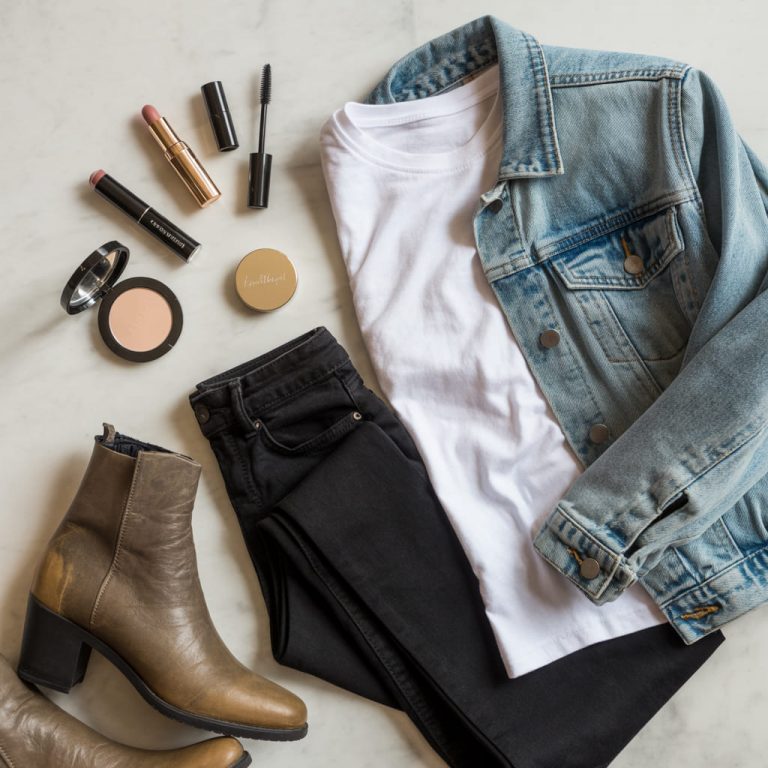
There was a morning when I left my apartment thinking I had chosen the right outfit. The pieces worked individually: a structured sweater, simple trousers, clean shoes. Everything aligned in theory, yet something about the entire look felt slightly unfinished.
Not wrong, not mismatched, just lacking the steadiness I expect in my everyday style. At first, I assumed the issue was the silhouette, so I shifted the hem, adjusted the tuck of the sweater, and even checked the length of the trousers. Nothing changed.
It wasn’t until I passed a window on my walk that I noticed the real problem. My posture looked different. My proportions looked slightly top-heavy. The neckline felt visually empty. The entire outfit looked like it was missing weight. And then I realized what I had forgotten: a belt.
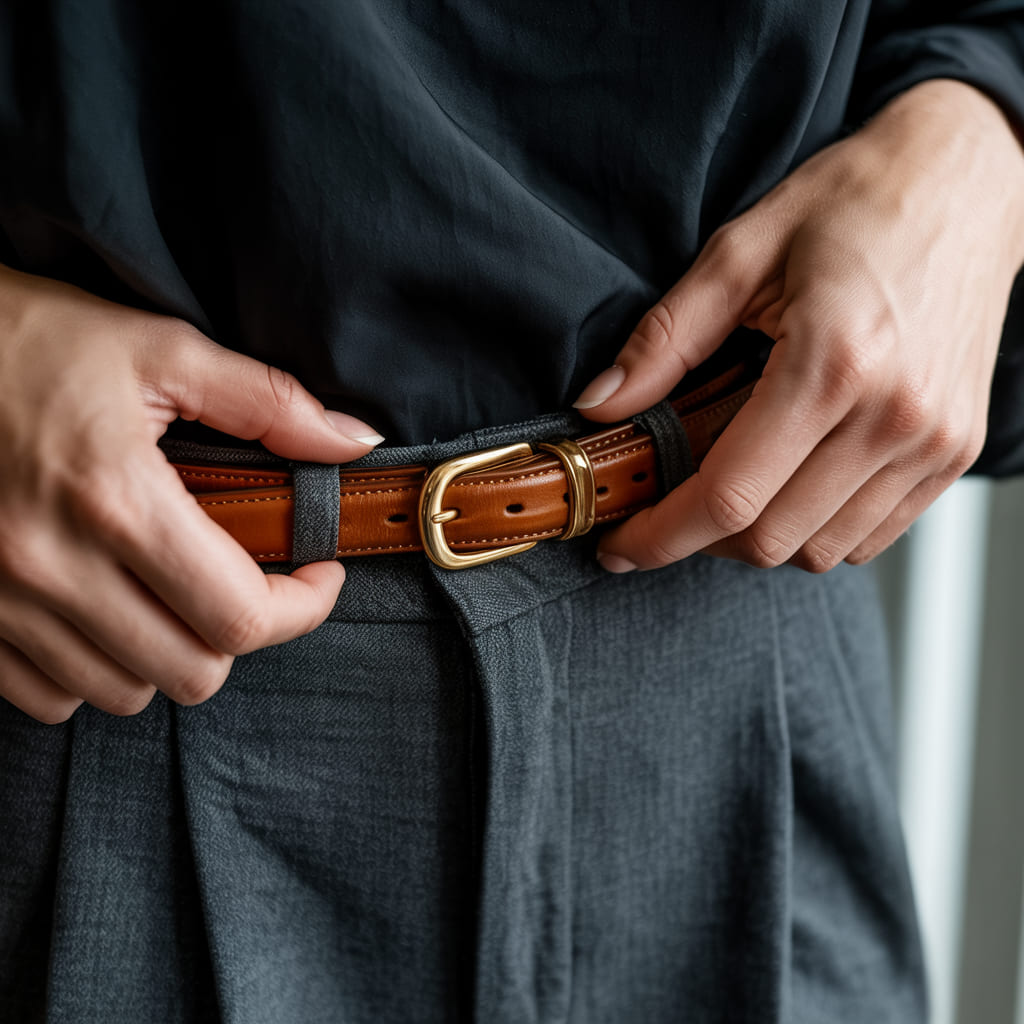
It wasn’t a belt with a statement buckle or decorative stitching. It wasn’t chosen for style at all. It was the simplest accessory I own: a soft leather belt in a shade close to my natural wardrobe palette. Yet without it, everything felt slightly unanchored.
That morning is when I understood that the most unexpected accessory in my wardrobe was also the most stabilizing.
Why a Belt Became More Than a Practical Detail
For years, I treated belts as purely functional. They existed to hold trousers in place, nothing more. I didn’t consider them part of my aesthetic identity. I certainly didn’t consider them a finishing layer. I didn’t even store them with the rest of my accessories.
But the more attention I paid, the more I realized that a belt altered something far more important than fit. It altered proportion.
I tend to wear pieces that follow the natural line of the body instead of creating exaggerated shapes. The simplicity works well with my style, but it also means that visual balance matters.
Without a belt, the center of the body becomes an uninterrupted vertical line. On some days, that works. On other days, it creates a kind of visual drift. The belt stops that drift. It gives the eye a place to rest. It creates a midpoint.
What surprised me most was how often I instinctively reached for it on days when I needed my outfit to feel more structured, even when I wasn’t entirely aware of why.
How I Noticed the Subtle Difference It Made
I didn’t analyze this immediately. I simply began watching my reflection more intentionally. On the days when I wore a belt, my outfits looked more aligned. On the days when I didn’t, they looked slightly stretched or unresolved.
A belt connects the upper and lower halves of the outfit the way a spine connects the upper and lower halves of the body. When it’s present, everything feels coordinated. When it’s missing, the absence becomes noticeable once you understand its influence.
This distinction became even clearer in three particular situations:
- When an outfit had minimal layers, the belt created the dimension that layering normally provides.
- When proportions felt slightly off, the belt reestablished balance without requiring a full change.
- When I wore monochrome looks, the belt prevented the outfit from becoming visually flat.
Over time, these observations turned into a pattern I could rely on.
Understanding Why Certain Accessories Change Proportion More Than Others
Most accessories decorate. A belt structures. It alters the silhouette the way framing alters a photograph. It adds boundaries and creates intention in places where clothing alone can become too fluid or too linear.
This became especially clear when I paid attention to how belts behave in different outfits:
- With trousers, they break the vertical line so the outfit doesn’t collapse downward.
- With tucked tops, they create separation so the top doesn’t blend into the bottom.
- With monochromatic outfits, they introduce micro-contrast that keeps the look dimensional.
- With looser shapes, they provide a point of visual clarity that keeps the silhouette from expanding too widely.
They are environmental observations about proportion, shape, and weight. The belt creates that structure without forcing a statement.
How I Choose the Belts That Actually Work
I tried decorative belts in the past but those pieces rarely lasted in my wardrobe. They demanded attention rather than offering balance.
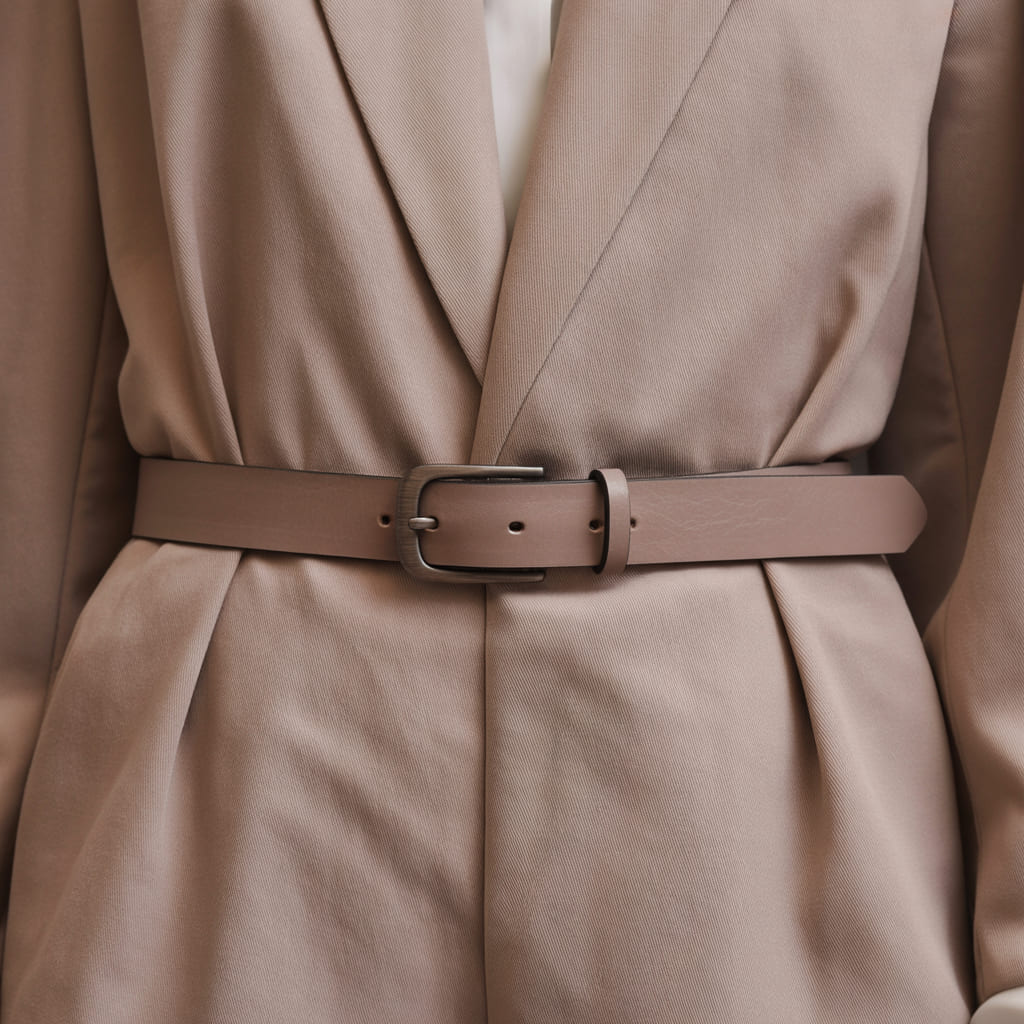
I realized quickly that the belt I considered essential was always the same type: quiet, soft in tone, structured but not rigid, and close to my natural wardrobe palette.
For clarity and practicality, here are the only qualities I look for now:
- Color that blends rather than contrasts
- A buckle that doesn’t draw the eye
- Leather or fabric that bends instead of creating stiffness
- A width that aligns with the loops of my trousers without overpowering them
These characteristics make the belt feel like part of the outfit rather than an accessory layered on top of it. When the belt recedes visually, its influence becomes structural instead of decorative.
The Personal Experience That Cemented Its Importance
I once traveled with a suitcase that included everything except a belt. I assumed the trip was short enough that it wouldn’t matter. I was wrong.
Every outfit looked slightly unbalanced. Every top I tucked felt out of place. Every trouser seemed to fall differently than usual. I didn’t realize how much I depended on the structure of that one accessory until I spent several days without it.
The moment I returned home, the belt slid back through my loops as if the outfit had been waiting for it. The difference felt immediate and grounding, a reminder that the accessory I once considered optional had quietly become essential.
A Closing Reflection From Juno Wilde
I didn’t choose the belt as my essential accessory. It revealed itself through years of inconsistencies, quick mornings, and passing reflections.
I learned to trust it because it remained useful when everything else felt unreliable. It became the small anchor that pulled an outfit together, especially on days when the rest of my routine felt unstable.
The most unexpected accessory in my wardrobe turned out to be the most grounding, not because it added beauty, but because it added balance.
Sometimes the detail you overlook is the detail that makes the entire look feel complete.