There are certain patterns you only recognize after years of repeating the same frustration. For me, it was the way my hair tangled every time the wind picked up.
I would go out on a breezy morning thinking everything was smooth and predictable, only to come home with knots behind my neck and strands pulled in directions they were never meant to go.
The moment things changed was surprisingly mundane. I was walking home from the grocery store on a day when the wind was erratic, more forceful than I expected.
My hair had been down, and by the time I reached my door, the entire lower half had twisted itself into a pattern that felt closer to rope than hair.
But it wasn’t the severity of the tangles that caught my attention. It was where they formed. Always at the same place. Always at the point where fabric met movement. Always because of the direction the wind pushed the strands.
It occurred to me, finally, that the problem wasn’t my routine. It was the air, specifically, the force of it. I didn’t need to reinvent my haircare; I needed a small habit that aligned with the weather.
The Habit That Changed Everything
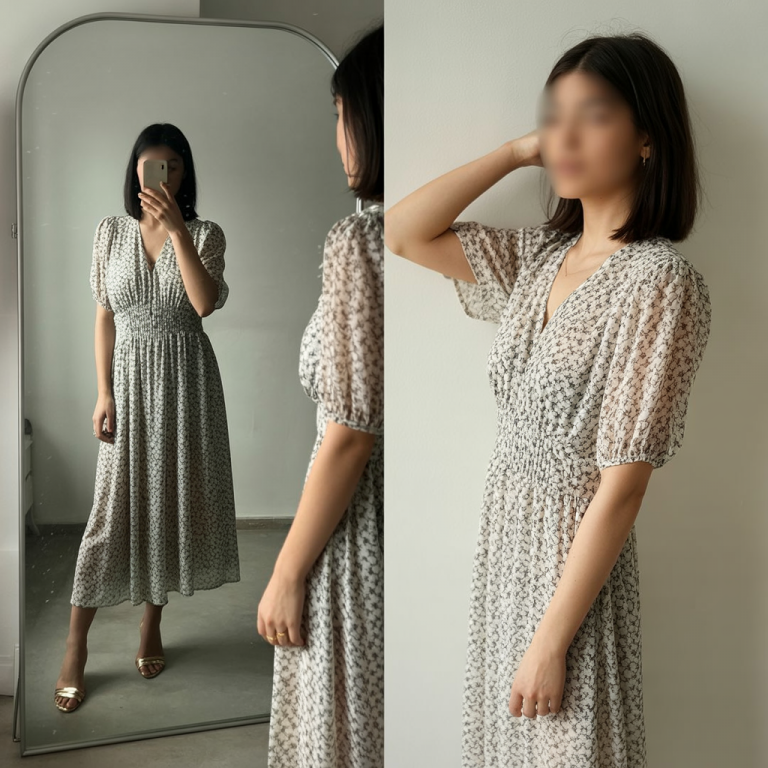
The habit began unintentionally. On another windy morning, I pulled my hair loosely to the front while walking, sliding it over one shoulder simply because I was tired of untangling it later.
When I reached my destination that day, I realized something surprising: there were no knots. Not one. The wind had still blown, but it had moved across my hair instead of into it, which meant the strands didn’t twist together.
From that point on, I paid attention to how hair interacts with wind. The physics of it are simple. When hair falls behind you, the wind pushes it forward and upward, lifting sections unevenly and forcing them to wrap around one another.
But when hair rests in front, gravity and position do the work that no product ever fully accomplishes. The habit became clear: on windy days, I always bring my hair forward before stepping outside, even if only loosely.
I don’t pin it. I don’t braid it. I don’t force it into anything complicated. I simply move it ahead of the wind instead of letting the wind move it. That small shift reduced tangles more effectively than any specialized detangling spray I had ever tried.

Why This Works Even When Your Hair Is Prone to Tangles
Tangling is not random. It follows patterns created by movement, friction, and direction. Once I understood that, I began watching how hair interacts with wind the same way I had learned to watch how it interacts with humidity or dryness.
Three things always happen on windy days:
- The wind lifts the top layer first, exposing the underside to friction.
- Strands collide with clothing, particularly near the collar and shoulders.
- Hair moves in circular motion, not straight lines, which encourages twisting.
When hair is brought forward, these three factors lose most of their influence. The wind moves across the surface rather than underneath it. Clothing becomes less of an obstacle. The movement is gentle instead of rotational.
The Days When This Habit Matters Most
I began recognizing the types of wind that cause the worst tangles. Not every breeze is disruptive. Not every gust creates knots. But certain conditions consistently cause problems, and after enough trial, I learned to predict them before stepping outside.
Wind causes tangles most aggressively when:
- the air is dry and light
- gusts occur in bursts rather than steady movement
- the wind pushes forward rather than sideways
- you are wearing clothing with texture at the shoulders
On those days, I don’t wait until I’m already outside. I move my hair forward before I step through the door so the wind doesn’t take the first opportunity to move it for me. This is the kind of habit that becomes instinct because of how consistently it works.
When I Added a DIY Solution That Made the Habit Even Better
For a few months, the “hair forward” habit was enough. But as seasons changed, I noticed that wind paired with dry air created a different issue.
Even if tangles were minimal, the ends became slightly brittle because wind pulls moisture from the surface layer quickly. I wanted something extremely lightweight that didn’t change my routine but provided a little protection on those days.
Traditional detangling sprays were too heavy for my texture, and oils attracted dust in the wind. So I made something that behaved like a micro-buffer, something barely present but noticeable in the way it prevented friction.
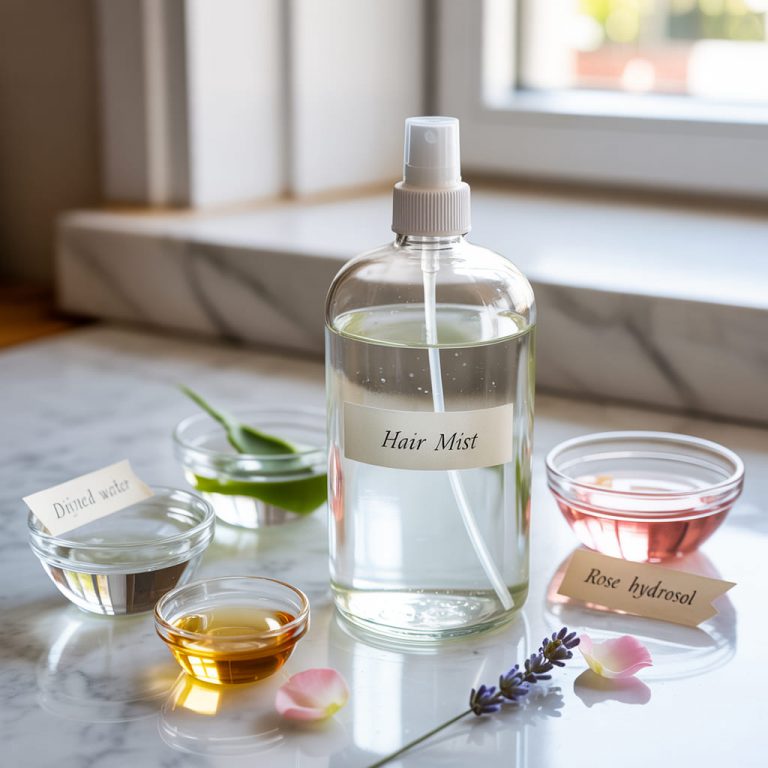
That became my Wind-Day Anti-Tangle Mist, a simple DIY solution that fits Juno’s style: minimal ingredients, practical purpose, and no unnecessary complexity.
DIY Wind-Day Anti-Tangle Mist (Juno’s Minimal Recipe)
This recipe came from trial, observation, and the need for something that didn’t alter the shape of my hair. It supports the habit rather than replacing it.
Ingredients
- 1 cup distilled water
- 1 teaspoon pure aloe vera juice (not gel)
- ½ teaspoon glycerin
- 3 to 4 drops of jojoba oil (optional, for winter dryness)
- 2 to 3 drops of lavender or rosemary essential oil (optional, for scent)
How I make it
I combine everything in a small spray bottle and shake gently. The mixture remains almost indistinguishable from water, but the aloe creates a thin, flexible film that prevents strands from catching on one another.
The glycerin pulls slight moisture into the hair without weighing it down. The jojoba, when used sparingly, helps during cold weather when the wind is dry.
How I use it
I apply just a few quick sprays to the underside of my hair before bringing it forward. I never saturate it. The mist exists to reduce static and friction, not to style. When paired with the habit of keeping my hair forward, the tangles became nearly nonexistent.

What Experience Taught Me About Predicting Wind Behavior
Years of watching the weather taught me more about hair care than any tutorial online. Wind behaves differently depending on the season, even when the speed is the same.
In spring, wind lifts because it carries moisture. In winter, it strips because it carries dryness. In summer, it expands because it holds heat. In autumn, it twists because temperatures fluctuate quickly.
Understanding wind behavior helped me understand what my hair would do before it did it. A few patterns became important:
- If trees sway sharply at the top, expect lifting and tangling at the crown.
- If wind is visible at ground level, expect movement near the ends.
- If gusts come in waves, expect twisting rather than simple movement.
When you begin noticing these environmental cues, your routine becomes proactive rather than reactive.
Why This Habit Matters More Than Any Wind-Proof Style
Protective hairstyles can help, of course, but they are not always practical for daily life. Some days you want your hair down. Some days you only have a few minutes to get ready. Some days complicated solutions create more inconvenience than the problem itself.
A small habit works because it meets the environment halfway. It doesn’t restrict movement. It doesn’t require tools. It doesn’t change the way your hair looks. It only prevents a predictable issue from occurring.
A Closing Perspective
Most of the things that improved my routine came not from trends, not from new products, and not from reinventing my approach, but from watching how my environment behaved. Wind was one of the last elements I learned to read because it felt too unpredictable.
But once I understood that tangles form because of movement patterns, not because of some flaw in my routine, the solution became clear.
One small habit changed everything: bring the hair forward, let gravity work, and stay ahead of the wind rather than inside it.
Paired with a minimal DIY mist that reduces friction, tangles stopped feeling inevitable. They became something I rarely think about now, and that is the mark of a habit worth keeping.
Sometimes the simplest adjustments are the ones that make your routine feel grounded, predictable, and entirely your own.