When I started experimenting with my own beauty formulas, I assumed that consistency depended mostly on the ingredients and their ratios. If a product felt too oily, I assumed I had used too much oil. If a balm separated, I assumed I had mismeasured the wax.
But after months of adjusting and re-adjusting formulas, I noticed a pattern that had nothing to do with the ingredients at all. The same mixture that felt stable one week would soften, separate, or thin out the next.
There was no change in measurement. No change in sequence. No change in technique. Yet the behavior of the formula changed noticeably. The only variable that shifted was the temperature of the room.
Once I recognized that connection, everything I thought I understood about formula consistency changed. I realized that warmer air alters not only the texture of oils and waxes but their distribution, their evaporation rates, and the speed at which they integrate during mixing.
And once I understood the role temperature played, I could finally address the issue directly instead of adjusting ingredients that were never the cause of the problem.
Warm Rooms Disrupt DIY Formulas Even If They Don’t Feel Hot to You
Homemade products react quickly to temperature because they do not contain the stabilizers and emulsifiers found in commercial formulations. Oils become thinner. Waxes soften. Powders disperse differently. Hydrosols evaporate faster.
What surprised me most was how subtle the difference needed to be to affect stability. A room that increased from 23°C to 26°C (73°F to 79°F) transformed the way my formulas held together.
A warm room can cause:
- oils to rise to the surface
- waxes to lose their rigidity
- pigments to sink or clump
- balms to turn glossy instead of soft-matte
- scrubs to lose density
- creams to thin out
What felt like a “failed recipe” was actually a temperature mismatch between the environment and the formula’s natural structure.
Once I stopped trying to fix the ingredients and turned my attention to the environment, the solution became more obvious than I expected.
The Exact Moment I Realized the Temperature Was the Real Culprit
I was making a simple multipurpose balm. The formula was familiar, the ratios reliable, and the method straightforward. But that morning, the balm would not set properly. It looked glossy, almost as if the wax had partially dissolved into the oils rather than suspending them.
It wasn’t until later that afternoon, when I stepped closer to the window, that I realized the room had warmed much more than usual. The sun had shifted, hitting the side of the house differently. The air felt slightly heavier, but not enough to catch my attention earlier.
At that moment, I understood that replicating the same formula in different environmental conditions would never produce consistent results unless I controlled the environment itself. Or I created a method that kept the formula stable regardless of room temperature.
Why Cooling Alone Doesn’t Fix the Problem
Most people assume the solution is to cool down the mixture. By the time you cool the container, the oils and waxes have already combined in a looser structure, which means the final product will still separate over time or soften too quickly as soon as it hits the skin.
If the environment is warm during the blending stage, the product becomes unstable before it ever reaches the cooling phase. This is why so many DIY products look fine for a day or two and then begin separating or changing texture later.
Understanding this is what led me to the stability trick that fixed the issue entirely.
The Stability Trick That Changed Every Formula I Make
Instead of adjusting the temperature of the formula itself, I began adjusting the temperature of the bowl by stabilizing the container before mixing.
Here’s the core principle: A room can be warm, but a formula does not have to respond to the room if the container maintains its own temperature long enough to preserve structural integrity.
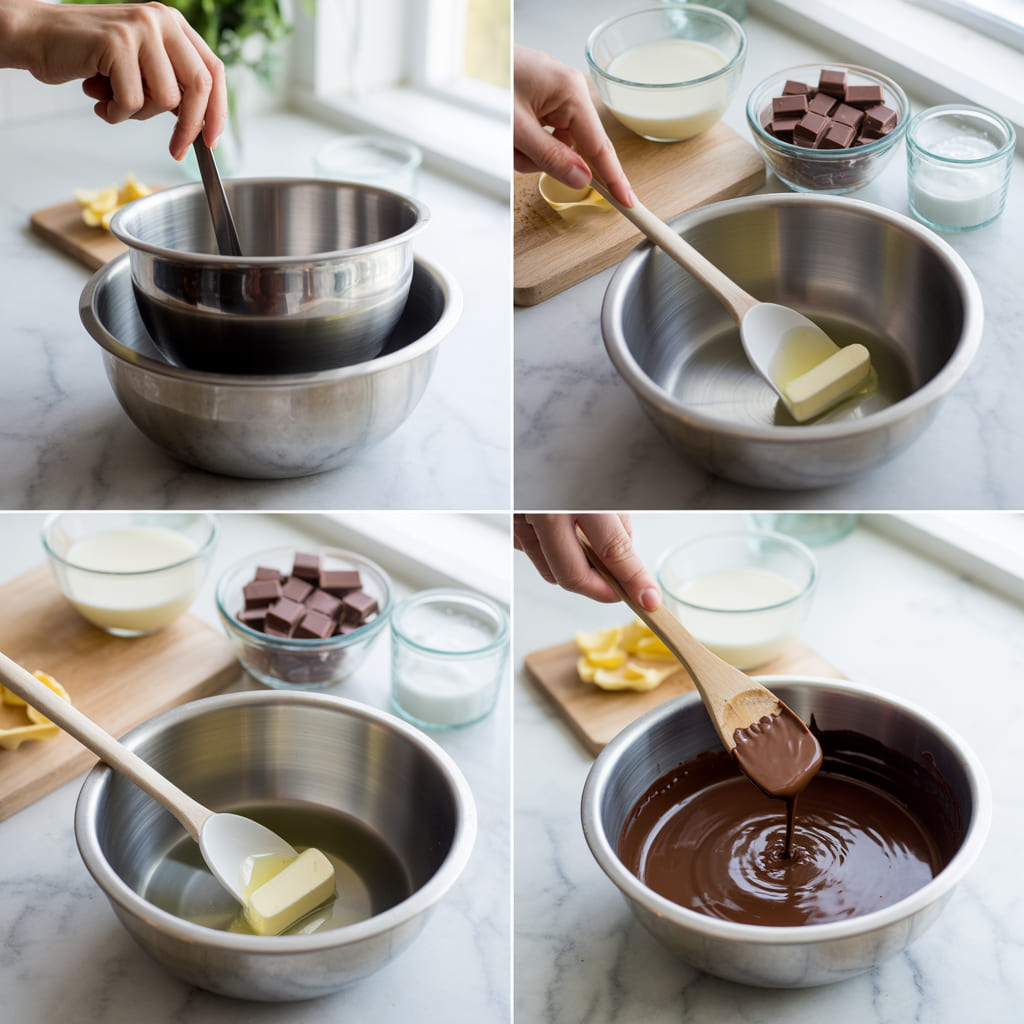
I began placing my mixing bowl inside a second bowl filled with cool water. This allowed the formula to bind at its own pace rather than responding to the warmth of the room.
The result was a consistent texture that did not change even when the temperature fluctuated throughout the day.
The Stability Technique with Recipe Example
Ingredients (example balm):
- 1 teaspoon rice bran wax
- 1 teaspoon shea butter
- 1½ teaspoons squalane
- Optional: pigment or essential oil
How I Apply the Stability Trick:
- Fill a larger bowl with cool (not cold) water.
- Place the mixing bowl inside it before adding any ingredients.
- Allow the bowl to adjust to the cooler temperature for one minute.
- Add ingredients and melt gently, keeping the bowl seated in the cool-water base.
- Stir frequently as the mixture combines so the structure forms slowly and evenly.
- Pour into a container once smooth, and allow it to set at room temperature.
Why It Works:
- The bowl maintains its temperature long enough for the formula to bind correctly.
- The ingredients cool at the right speed, not the speed dictated by the room.
- The structure forms before the environment can influence it.
What Happened the First Week I Used This Technique
The first balm I made with this method remained completely stable for an entire week. It didn’t soften unexpectedly. It didn’t develop oil separation. It didn’t lose density or change color. It behaved identically every day, which had never happened before during warm weather.
I tested the technique again with a lip color, a micro-exfoliant base, and a tinted balm. All three remained stable, even when the room heated up in the afternoon. The consistency held because it had formed under controlled conditions rather than reactive ones.
By the end of the month, every product I made used this method. I stopped adjusting ingredients and started trusting the formulas because the temperature variable had finally been neutralized.
Why This Stability Trick Works No Matter the Formula Type
The technique works across multiple categories because:
- waxes stay structurally reliable
- oils maintain their intended density
- pigments remain suspended rather than settling
- powders distribute more evenly
- hydrosols evaporate at the correct rate
Whether the formula is oil-based, water-based, or wax-based, controlling the bowl’s temperature preserves the structure of the mixture far more effectively than adjusting ingredients will.
A Closing Reflection
Learning to stabilize my mixing environment taught me that consistency is not something the formula should fight for. It is something the routine should protect. The temperature of the room is not something I can control every day, but the temperature of the bowl is.
This one adjustment has made every formula more reliable. The products behave predictably because the foundation they form upon is stable, regardless of how warm the room becomes.