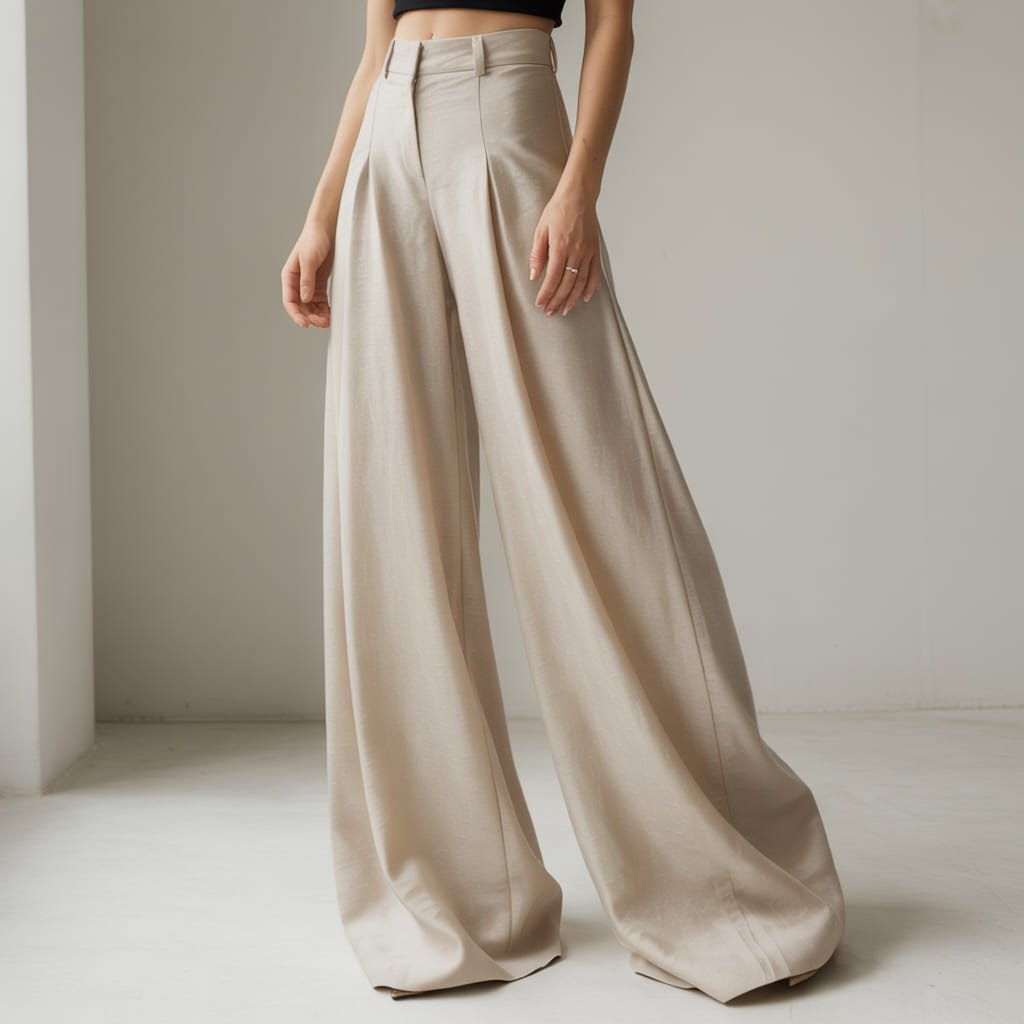
Wide-leg pants have always been one of my favorite silhouettes because of the way they create movement without restricting air flow, but they come with a particular flaw that frustrated me for years.
They looked clean and structured in the morning, yet by early afternoon the fabric at the knees began to collapse, the hem drifted outward, and the shape lost the vertical line that makes wide-leg pants so flattering.
I used to assume this softening happened because I sat too much during the day or walked too quickly, but the problem persisted even on days when my movement was minimal.
That realization shifted my focus entirely. Instead of trying to correct the collapse after it happened, I wanted to prevent the fabric from losing structure at all. I wanted a method that would support the drape, resist heat, and keep friction from distorting the lines.
Why Traditional Solutions Didn’t Solve the Problem
Whenever I searched for solutions, the same advice appeared repeatedly: starch the fabric, choose heavier material, hang the pants properly, or iron them immediately before wearing.
None of these methods addressed the root cause. Starch makes fabric crisp, but it cannot withstand hours of friction behind the knees or the heat that builds along the inner thighs.
Choosing heavier fabric works only to a point; even dense material collapses once humidity increases. Hanging pants or ironing them only corrects the initial appearance, not the long-term behavior.
It was the environment the pants entered. Fabric responds constantly to:
- humidity levels
- body heat
- friction points
- the texture of chairs
- the weight of the hem
- airflow
- pressure from walking
Wide-leg pants have more surface area and therefore more surface vulnerability. Once I recognized that the environment, not the preparation, caused the collapse, I realized the solution needed to be dynamic rather than static. It had to act throughout the day, not only at the beginning.
The Turning Point: A Single Afternoon That Showed Me Exactly Where the Shape Fails
One afternoon during peak summer heat, I was sitting outside a café and felt the air shift slightly. Warmth pressed upward from the bench, and the fabric behind my knees softened immediately.
When I stood up, the structure of the pants had collapsed from the back downward, which created a diagonal line that affected the entire silhouette.
I pressed the fabric flat with my hands, and it returned to shape for only a few seconds before relaxing again. That brief moment revealed something important: the fabric wasn’t “wrinkling.” It was loosening.
This was not a fabric issue. It was a fiber-behavior issue triggered by the environment.
To solve it, I needed something that controlled fabric drift in real time without stiffening the pants or weighing them down. I needed something that worked with the fabric rather than attempting to override its behavior.
How I Developed a DIY Support Layer That Keeps the Shape Stable
I realized that the fabric didn’t need more structure; it needed internal support that maintained vertical direction even when the fibers softened. I studied the areas of the pants that changed shape first. These areas absorb heat and press repeatedly against surfaces, weakening their tension over time.
The solution became clear when I noticed that certain fabrics, like cotton-linen blends, maintain structure longer because their inner seams remain taut. The seam acts as a stabilizing anchor, controlling how the surrounding fabric responds to movement.
I wanted to replicate that effect without adding visible seams or altering the pants. The idea was to insert a light, invisible support layer that followed the line of the leg and absorbed the movement instead of letting the pants absorb it.
This support layer needed to be:
- thin enough not to add bulk
- breathable enough not to trap heat
- flexible enough to move with the leg
- stable enough to resist drift
- removable for washing
After experimenting with different materials, I discovered that a narrow strip of cotton interfacing behaved exactly the way I needed it to.
It maintained tension. It remained stable in heat. And when sewn or adhered strategically, it held the drape of the pants without appearing anywhere on the outside.
Where the Support Layer Goes and Why Placement Matters
The instinct might be to reinforce the entire leg, but that creates stiffness. The real improvement comes from supporting only the areas where collapse begins. After mapping the movement of my pants over several weeks, I realized there are three points of distortion that shape loss always follows:
- The back of the knee — where fabric repeatedly bends
- The inner thigh — where friction softens the fibers
- The outer seam midpoint — where the weight of the leg pulls downward
By placing a narrow strip of interfacing along the inner seam near the knee, I created a tension zone that prevented the fabric from loosening unevenly. The fabric still moved, but the movement no longer distorted the silhouette.
This small internal shift changed the structure of the pants completely.
The DIY Support Method (Materials + Steps)
Materials:
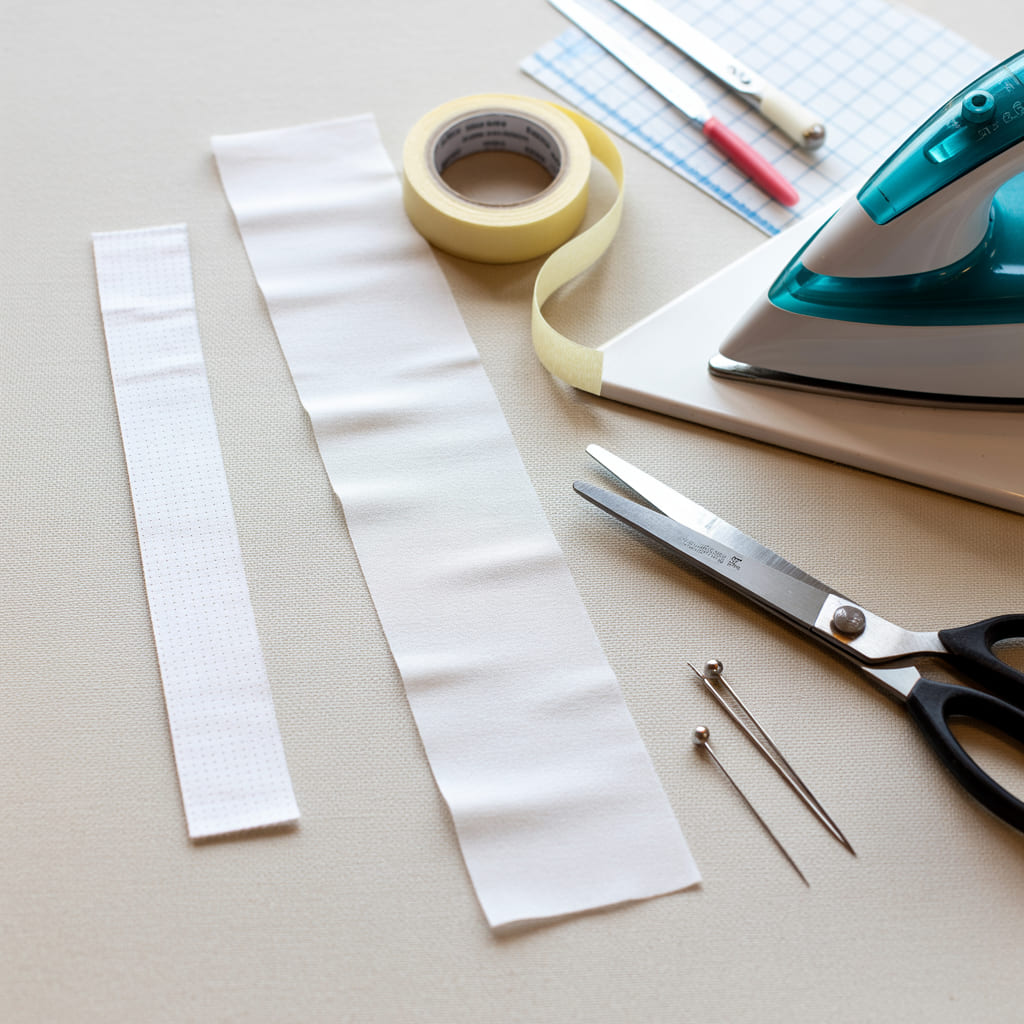
- Two narrow strips of lightweight cotton interfacing (about 1 inch wide, 8–10 inches long)
- Fabric adhesive tape or basic sewing tools
- Iron (only for interfacing that requires heat activation)
How I Apply the Support:
- Turn the pants inside out and locate the inner seam at knee height.
- Place the interfacing strip along the seam, ensuring it remains flat.
- Either stitch lightly along the seam line or use fabric adhesive to secure the strip.
- Repeat on the other leg.
- Smooth the fabric and allow it to set fully before wearing.
The interfacing becomes invisible once the pants are turned right-side out, yet it holds the structure for hours.
Why This Support Method Works in Multiple Seasons
Initially I worried that the support layer would only help during warmer months, but it turned out to be beneficial in several conditions:
- In warm weather: it prevents heat-induced softening
- In dry weather: it stops the fabric from collapsing from friction alone
- In cool weather: it reduces bunching from repeated sitting
- In humid conditions: it slows down fiber relaxation
The method works because it doesn’t respond to a single condition; it targets the structural behavior of the fabric itself. Once supported, the pants behave predictably regardless of temperature shifts.
What This Method Taught Me About Clothing Behavior
After years of observing how fabrics respond to movement, pressure, and temperature, this method reinforced something I already suspected: most clothing problems are not fabric problems; they are structural problems shaped by the environment.
Wide-leg pants are vulnerable not because the silhouette is flawed, but because the structure is unsupported where the body moves the most. Adding support stabilizes the design.
This experience taught me that:
- clothes collapse where tension is missing
- shape is preserved when support is present at the correct points
- environmental conditions dictate how fibers behave
- internal structure matters as much as external appearance
Once I started viewing clothing as a system influenced by movement and heat, I began solving wardrobe issues more precisely.
A Closing Reflection
This DIY method is simple but it changed my relationship with wide-leg pants entirely. The silhouette stays consistent, the movement stays clean, and the routine becomes easier.
What began as frustration became a structural improvement, and now the pants behave the way they were designed to behave.