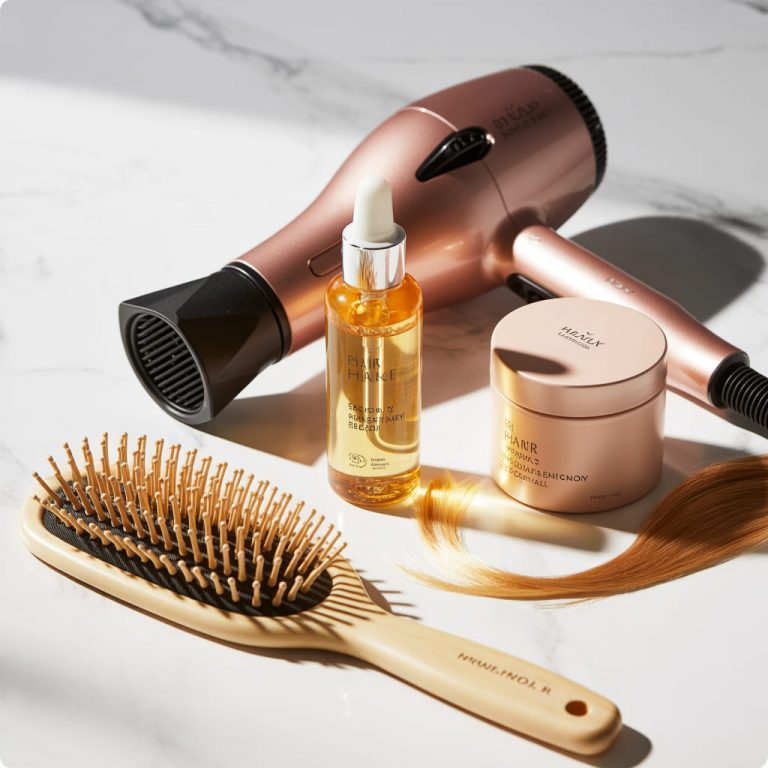
There comes a point every year when the temperature shifts in a way that makes even the most reliable lip products feel too dense. I notice it not because of the warmth outside, but because of the way my lips begin resisting anything with weight. What usually feels nourishing during cooler months suddenly becomes uncomfortable.
The layer sits on the surface instead of absorbing. The lips feel coated instead of conditioned. And what should provide relief ends up creating an additional layer of heaviness I don’t want during warm weather.
For a long time, I responded to this seasonal change by simply using less product, assuming that reducing the amount would reduce the heaviness. But that adjustment never worked the way I hoped, because the issue was the texture.
Heat changes the way certain oils behave. It alters how balms spread, how waxes soften, and how the lips absorb moisture. A formula that feels balanced in winter becomes overly pliable in summer, which makes it sit on the lips instead of working with them.
If I wanted something that felt comfortable in heat, I needed to create a formula that remained lightweight even when temperatures climbed.
Understanding Why Most Lip Products Become Uncomfortable in Heat
The more I paid attention to this seasonal shift, the more predictable it became. Heat changes the structure of oils and waxes in subtle ways.
Balms soften before the lips even touch them. Oils spread faster than the skin can absorb them. Waxes lose their rigidity and turn into something that feels slippery and imprecise.
These changes don’t necessarily make the products ineffective, but they do make them uncomfortable when the goal is to avoid feeling coated.
Most lip products rely on heavier base ingredients because those ingredients create a seal that protects the lips during cold seasons. But during warm months, that same seal becomes excessive.
Instead of supporting moisture, it traps heat. The lips begin to feel warmer than the rest of the face, which makes the heaviness even more noticeable. Eventually, even a small amount of product feels exaggerated.
Once I observed this pattern, I knew the solution needed to address texture first and hydration second. A lightweight formula would always feel more comfortable in heat than a nourishing one, but I didn’t want to sacrifice hydration entirely.
I needed a blend that absorbed quickly enough to avoid heaviness but still offered enough support to prevent dryness.
Creating a Lip Treatment That Works With Heat Instead of Against It
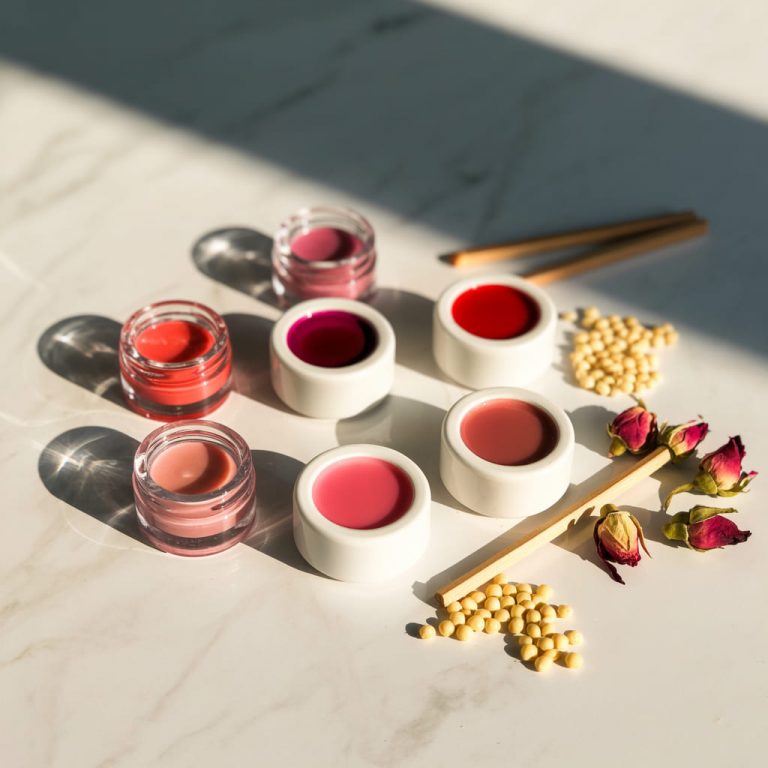
The blend I eventually created is not a product in the conventional sense. It is a combination of three components that each serve a specific purpose: slip, absorption, and support.
What makes it effective is not the ingredients themselves but the way they interact with heat. I needed something that would become even lighter as the temperature rose, not heavier. The formula had to adjust to the environment instead of resisting it.
I began by testing lightweight plant oils that remained fluid regardless of temperature. These oils spread easily but evaporate or absorb quickly, which prevents buildup.
Then I added a minimal amount of an ingredient that provides structure without adding weight, something that prevents the lips from feeling bare but doesn’t create a barrier. Finally, I included a hydrating component that integrates into the blend without altering the overall texture.
Through trial and error, I found a ratio that created a thin layer that settled almost immediately. Instead of sitting on the lips, the blend absorbed while still leaving a smooth surface. The goal wasn’t shine or gloss. It was comfort.
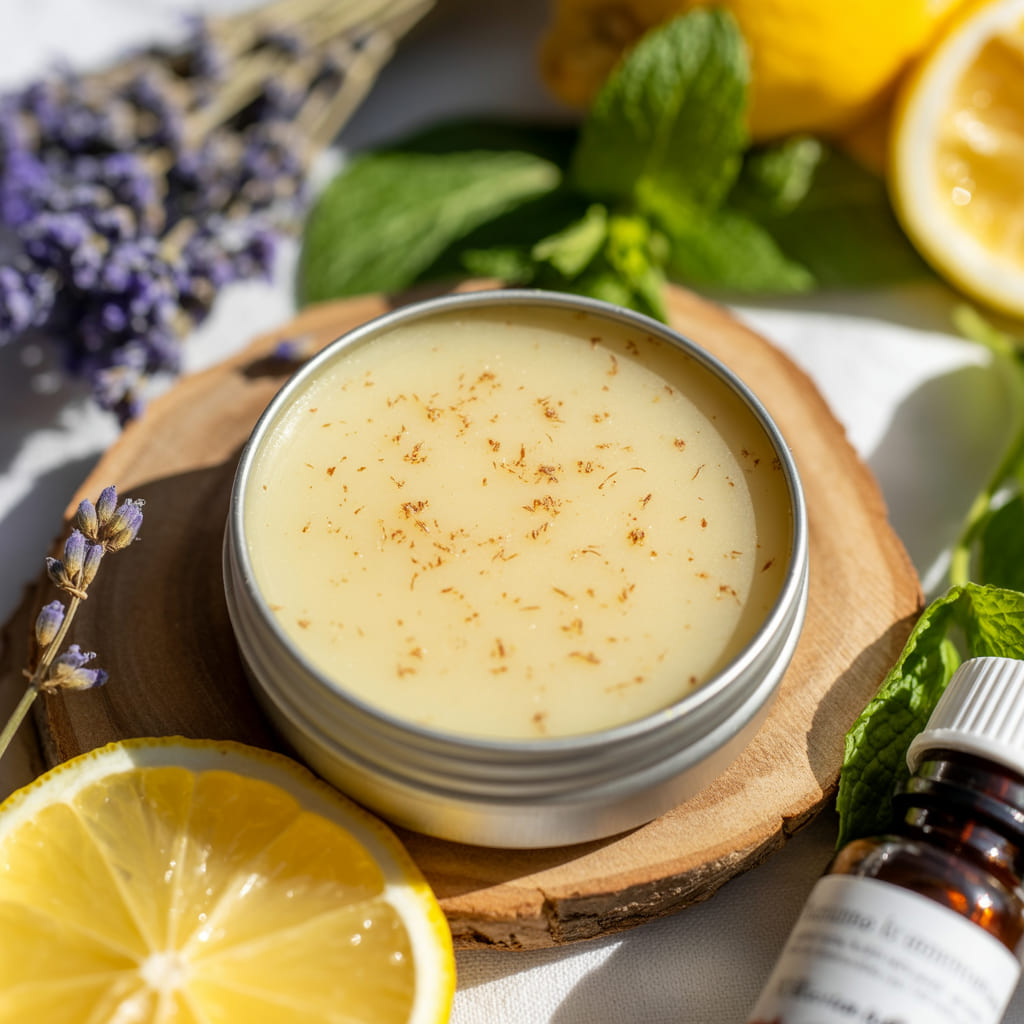
How the Heat Responds to This Blend Differently Than Commercial Balms
What makes this homemade blend distinct is the way it behaves when temperatures rise. My blend becomes more fluid, but not in a way that exaggerates thickness. The warmth encourages absorption instead of creating excess slip.
When I first used it during a warm morning, I noticed how quickly the formula disappeared into the lips without leaving any trace of weight. The layer felt like part of the skin rather than something applied on top of it. The heat enhanced the experience instead of working against it.
That moment confirmed that the formula worked not because it was hydrating, but because it was designed to be compatible with the environment. When products behave predictably in heat, the routine becomes predictable as well.
Why This Blend Works Better Than Skipping Lip Products Entirely
There were times in the past when I avoided lip products altogether during warm months because everything felt too heavy. But skipping the product entirely caused its own issues.
The lips would become dry faster. Movement throughout the day created small cracks or roughness that made the next application uneven. The absence of hydration didn’t make the lips feel lighter. It made them feel unfinished.
This homemade blend solves that problem because it disappears without leaving residue. It supports hydration without creating a seal. It allows the lips to feel natural while still providing the smoothness needed for the rest of the routine.
Skipping lip products may feel easier, but it creates more maintenance over time. A lightweight blend reduces that maintenance without adding weight.
How This Treatment Fits Into My Morning Routine Without Disrupting Flow
One of the reasons I keep using this blend is because it integrates cleanly into the routine. It doesn’t require special preparation, and it doesn’t interfere with other products. I apply it early in the sequence so the formula has time to settle while I move through my base and hair steps.
By the time I return to the lips, the blend has absorbed completely, creating a stable, smooth surface without any shine. At that point, I can either leave the lips as they are or apply a tint without worrying that it will slide or mix poorly.
What I appreciate most is that the treatment remains stable throughout the day. It doesn’t melt when the heat rises. It doesn’t reappear on the surface. It doesn’t change texture. It simply supports the lips in a way that feels weightless and controlled.
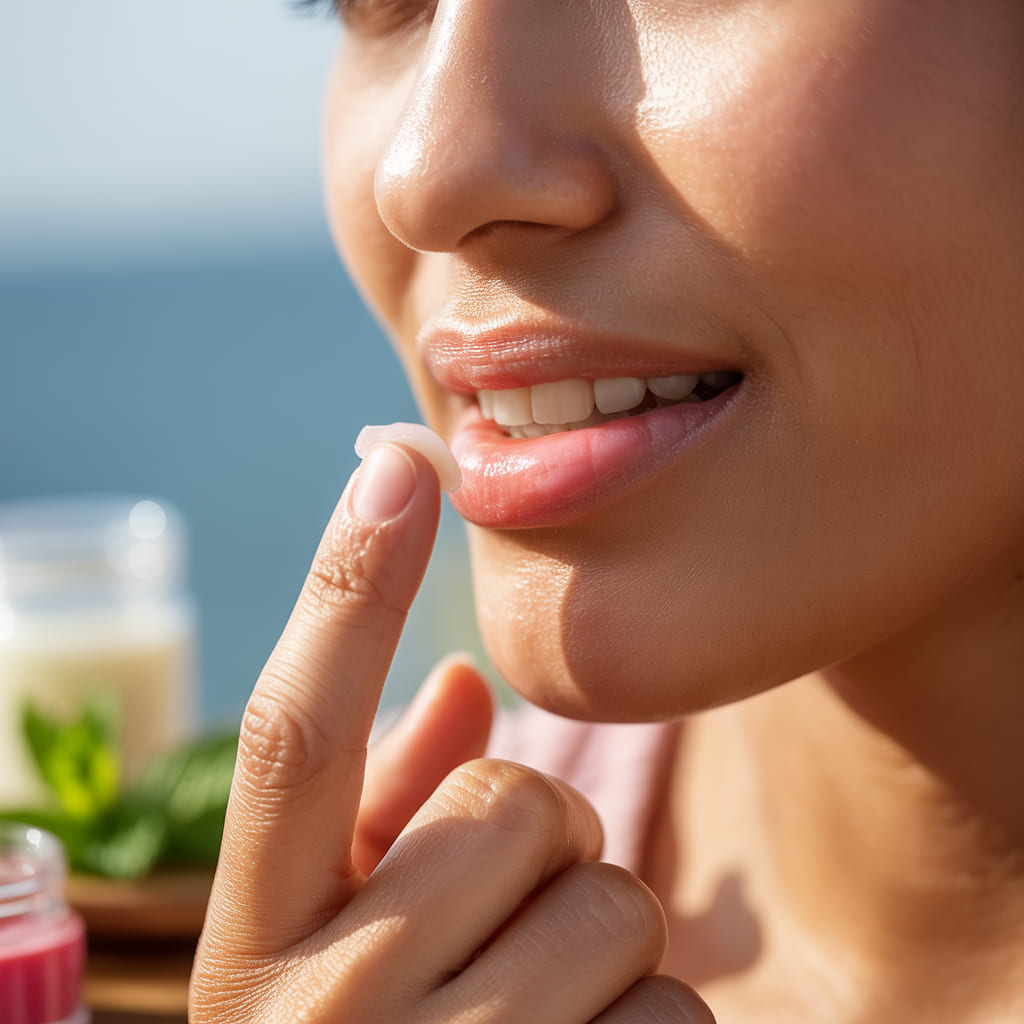
The Consistency Over Time Confirmed That the Formula Was Effective
I tested the blend throughout an entire warm season, and each month revealed something important. During early heat, the treatment prevented the lips from feeling coated.
During peak temperatures, it remained comfortable even when the air felt heavy. During transitional days, the formula still behaved predictably, absorbing quickly and creating smoothness without shine.
This consistency made it clear that the blend wasn’t functioning as a seasonal fix but as a structural change in the routine. Instead of switching to new products based on weather, I had created something that adapted automatically.
The treatment responded to conditions rather than requiring me to monitor or adjust anything. That adaptability is what makes the blend worth keeping.
What This Taught Me About Seasonal Adjustments and Environmental Logic
This experience reinforced something I have learned repeatedly in my routine: solving environmental problems requires solutions built around the environment, not preference.
A formula that works beautifully in winter is not automatically suited for summer, and reducing the amount of product does not change the behaviour of its ingredients.
Heat is not a minor variable. It is a transformation agent. It changes texture, absorption, viscosity, and comfort. Instead of resisting those changes, I designed a treatment that uses them. When heat accelerates absorption rather than interfering with it, the routine becomes easier to maintain.
This approach made me reconsider how I evaluate other products and routines. Instead of asking whether something is effective, I ask whether it is compatible with the conditions in which I use it.
A Closing Reflection
The simple lip treatment I created is not remarkable because of its ingredients, but because of the logic behind it. It works because it respects the reality of warm conditions rather than trying to override them.
By creating a formula that becomes lighter in heat instead of heavier, I eliminated a recurring source of discomfort that had been disrupting my routine for years.
The experience taught me that seasonal adjustments do not always require new products. Sometimes they require rethinking the mechanics behind the products we already use.
When the environment shifts, the routine should shift with it. The most reliable solutions are often the ones that work with the environment rather than against it.